


Commercial Light Poles: The Foundation Every Lighting Project Needs But Nobody Talks About
Commercial light poles, available in steel and fiberglass, are the structural backbone of every serious outdoor lighting installation. Most people focus on the fixture. The lumens, the efficacy, the color temperature. They spend weeks selecting the right area light, then order the first commercial light pole that shows up in a search result.
That's where projects go wrong.
A lighting system is only as reliable as the structure holding it up. The wrong pole height kills coverage. The wrong gauge buckles under wind load. The wrong installation method creates a rework problem that costs far more than getting it right the first time. At American Lighting Systems, we carry commercial light poles in steel anchor base and fiberglass direct burial options, engineered to hold up so your lighting investment performs the way it was designed to.
What Are Commercial Light Poles?
Commercial light poles are heavy-duty outdoor structures engineered to mount and elevate lighting fixtures across large-scale properties and high-traffic environments. Steel and fiberglass are the two materials that define the market, and they serve very different purposes. Whether you're installing a parking lot light pole across a 200-stall lot or mounting fixtures along a campus perimeter, a commercial light pole is built to withstand decades of exposure: wind load, temperature swings, UV degradation, and in coastal environments, relentless salt air - while holding fixtures at the heights needed to achieve uniform, code-compliant illumination across wide areas.
Steel is the workhorse. High-strength, load-bearing, available in multiple gauges and profiles, and the standard choice for parking lots, campuses, and municipal installations where structural specs and permit requirements are part of the job. Fiberglass is the specialist. Non-corrosive, low-maintenance, and the clear choice for coastal, marine, or chemically aggressive environments where steel's long-term performance becomes a liability.
The right material is not a style decision. It is a site conditions decision. Get it right upfront, and your commercial light post stands quietly for 25 years. Get it wrong, and you are replacing infrastructure on a timeline nobody planned for.
What Is Actually at Stake When You Choose a Commercial Light Pole?
Think about what a commercial light post does. It holds a fixture 20, 25, sometimes 30 feet in the air through high winds, coastal salt air, freeze-thaw cycles, and years of neglect. Night after night, it has to maintain structural integrity while your fixture does its job. There is no margin for error here.
Get the height wrong, and your coverage gaps show up before the concrete cures. Get the gauge wrong, and you are replacing poles inside your warranty period. Get the installation method wrong for the site, and you are dealing with a failure that is expensive in ways that go well beyond the invoice.
This is not the part of the project to cut corners on.
Which Commercial Light Pole System Is Right for Your Project?
Steel Anchor Base Commercial Parking Lot Light Poles
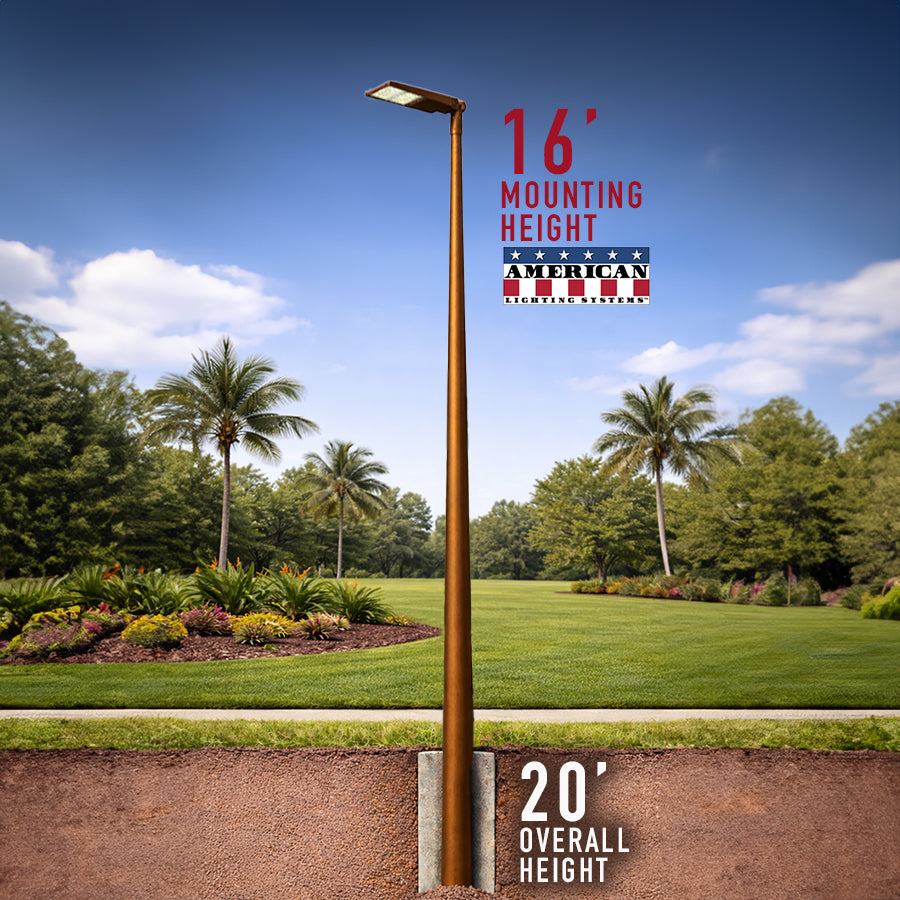
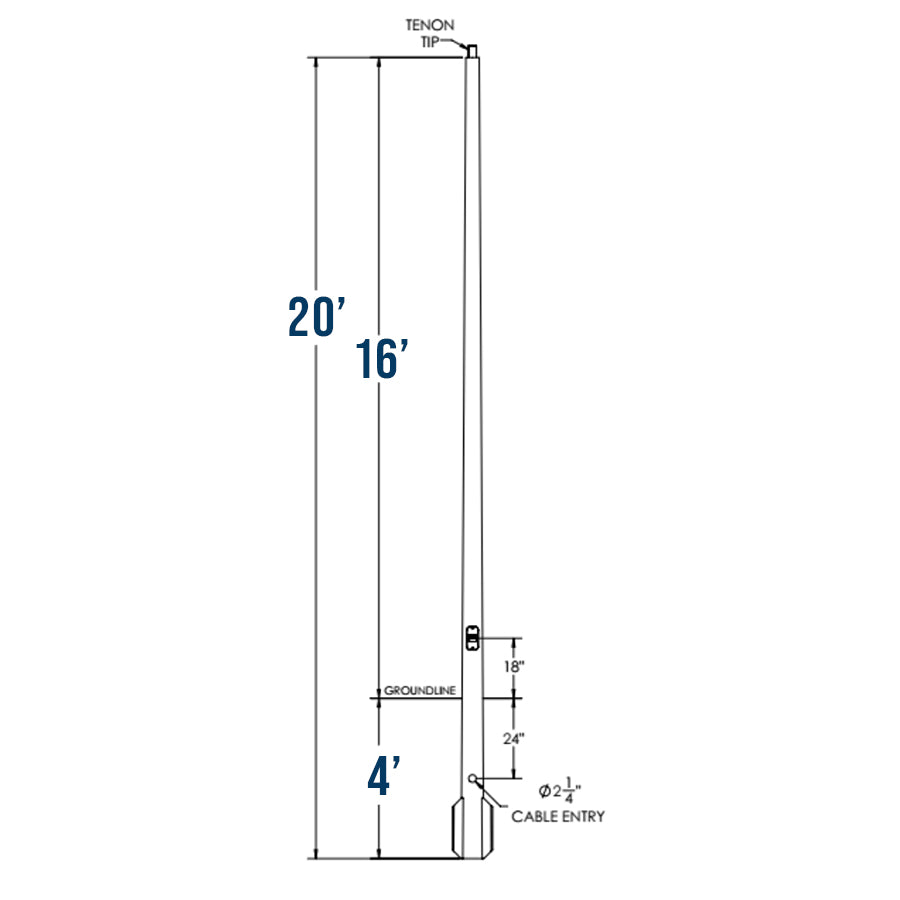
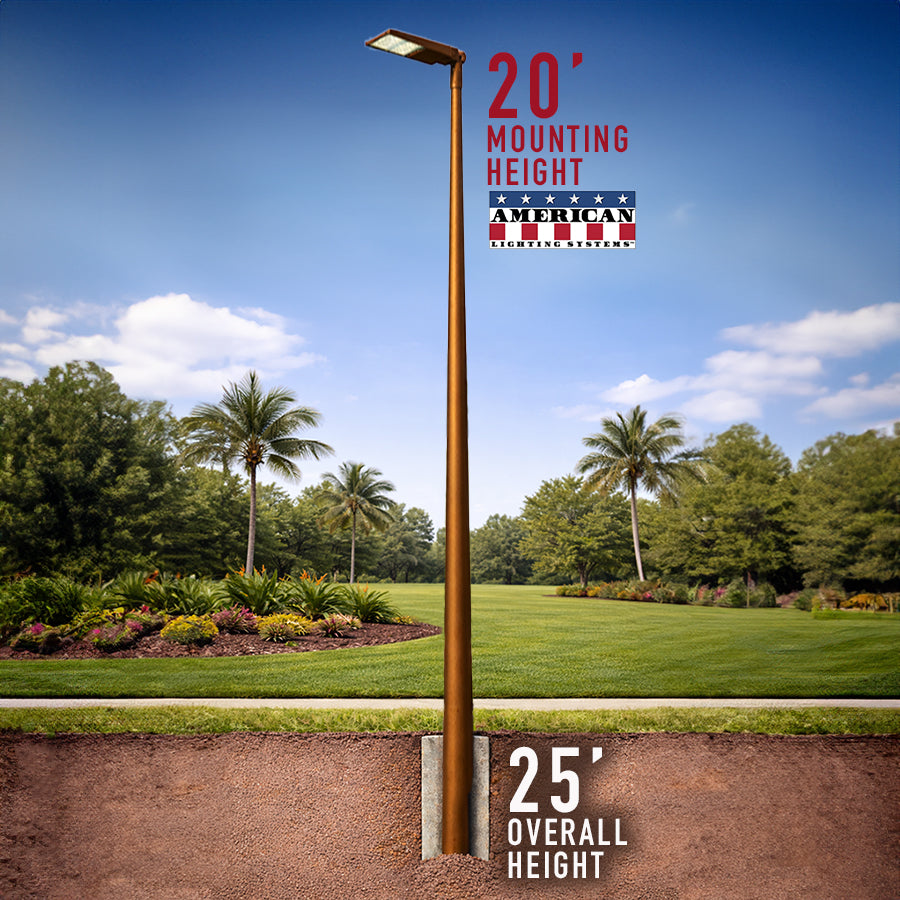
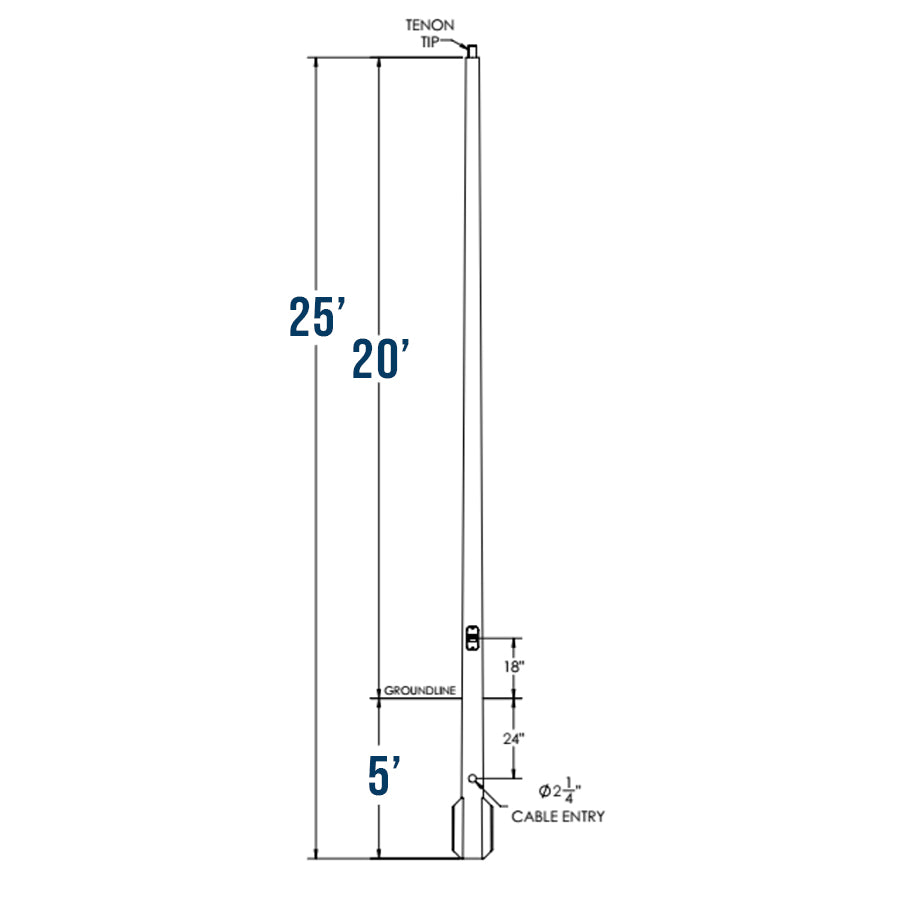
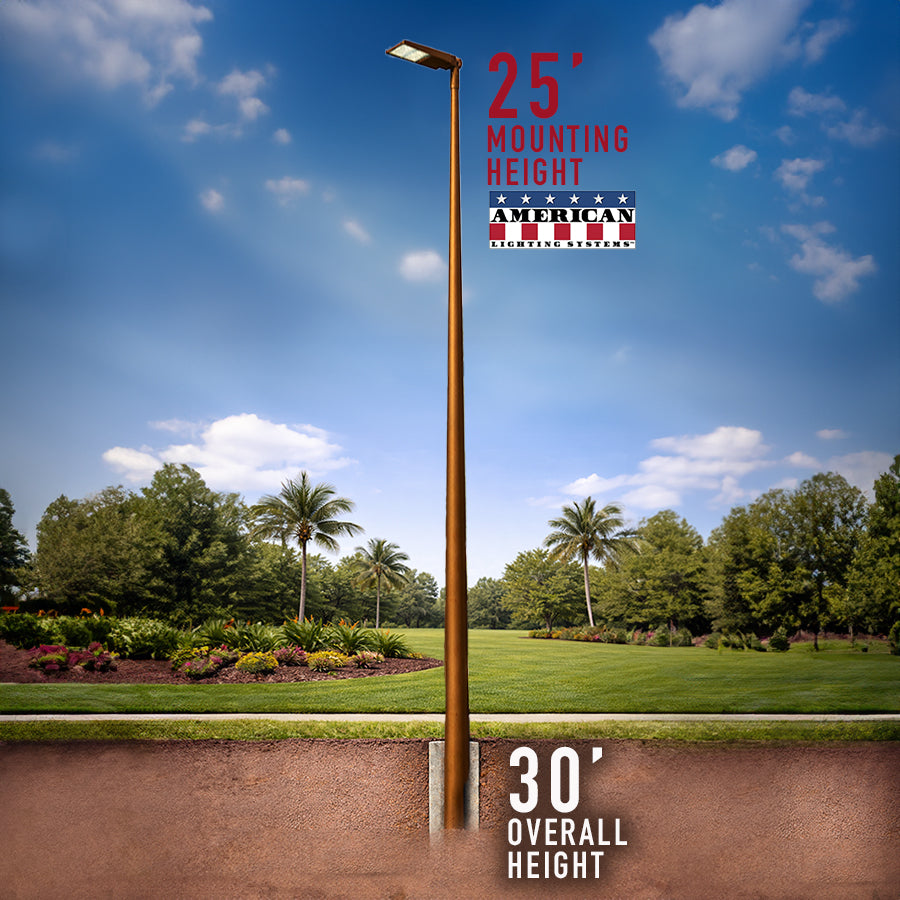
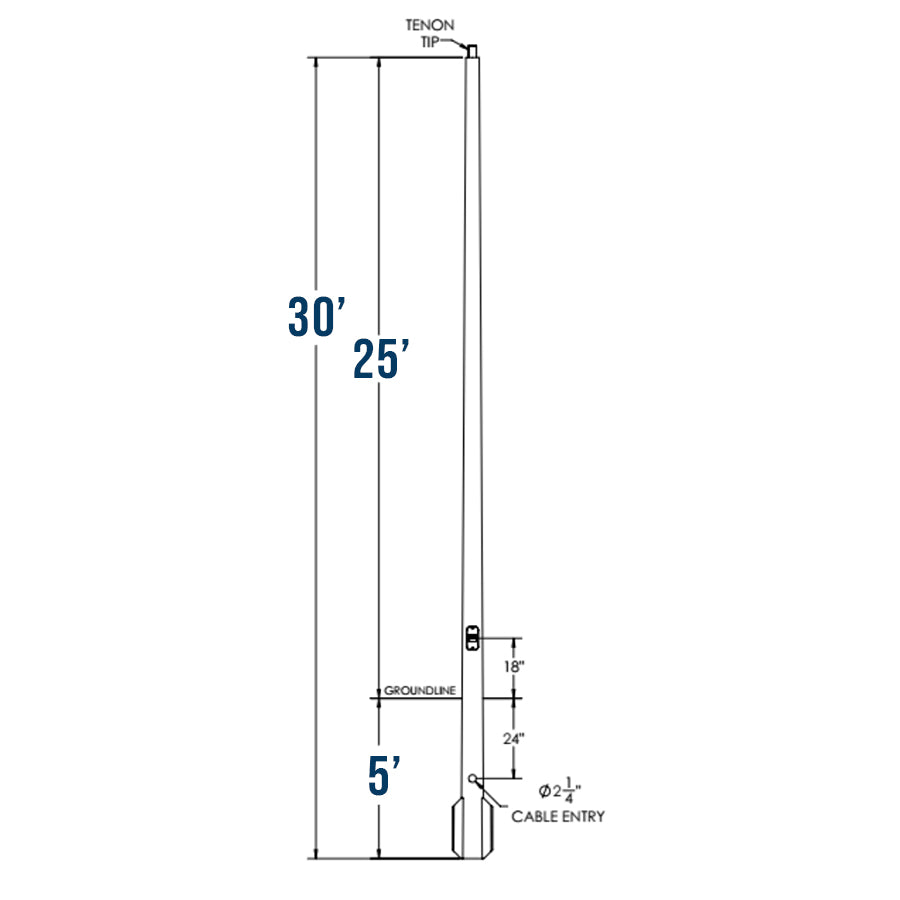
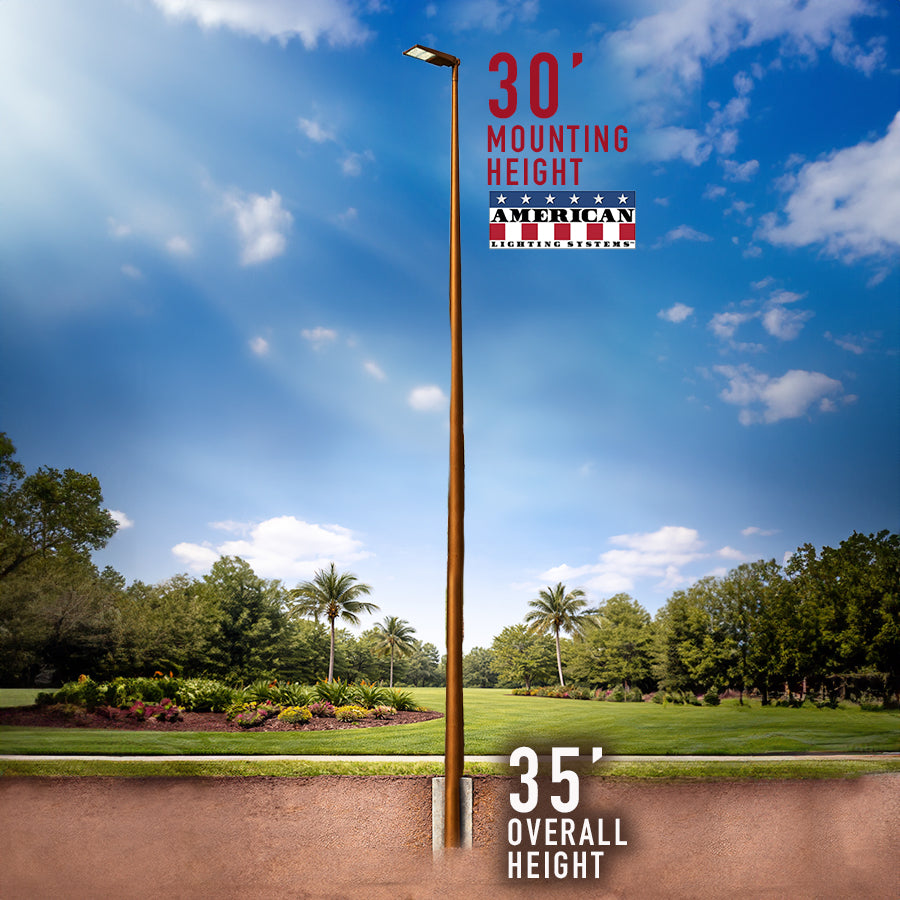
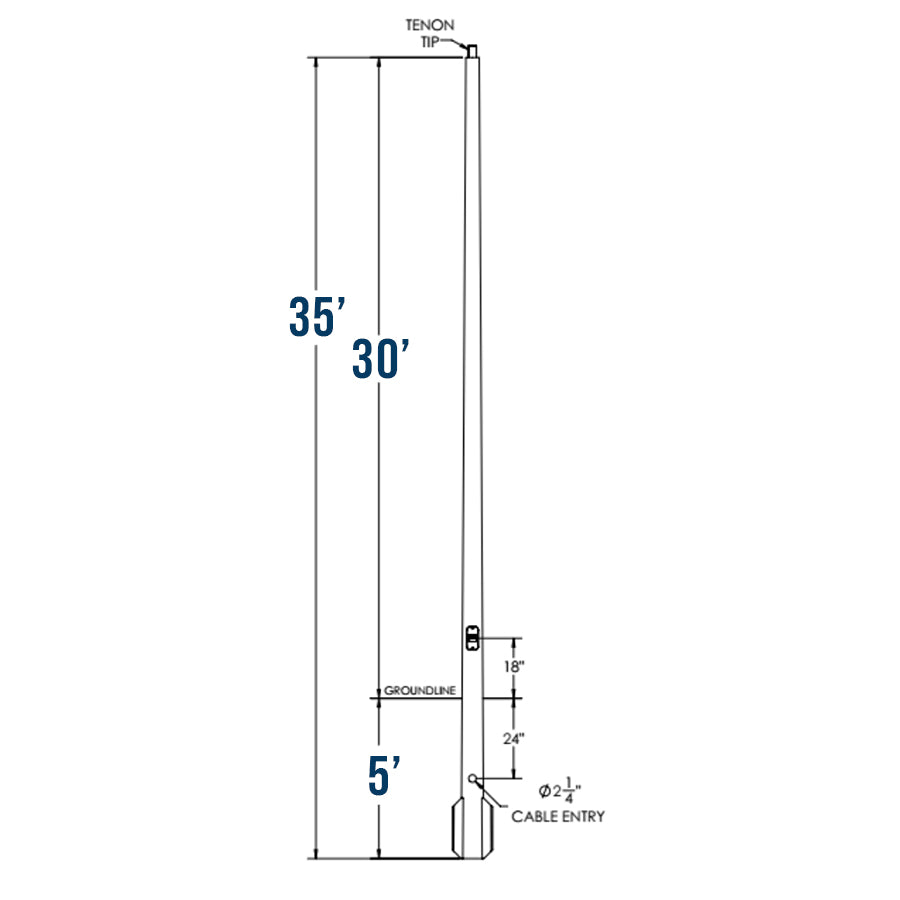
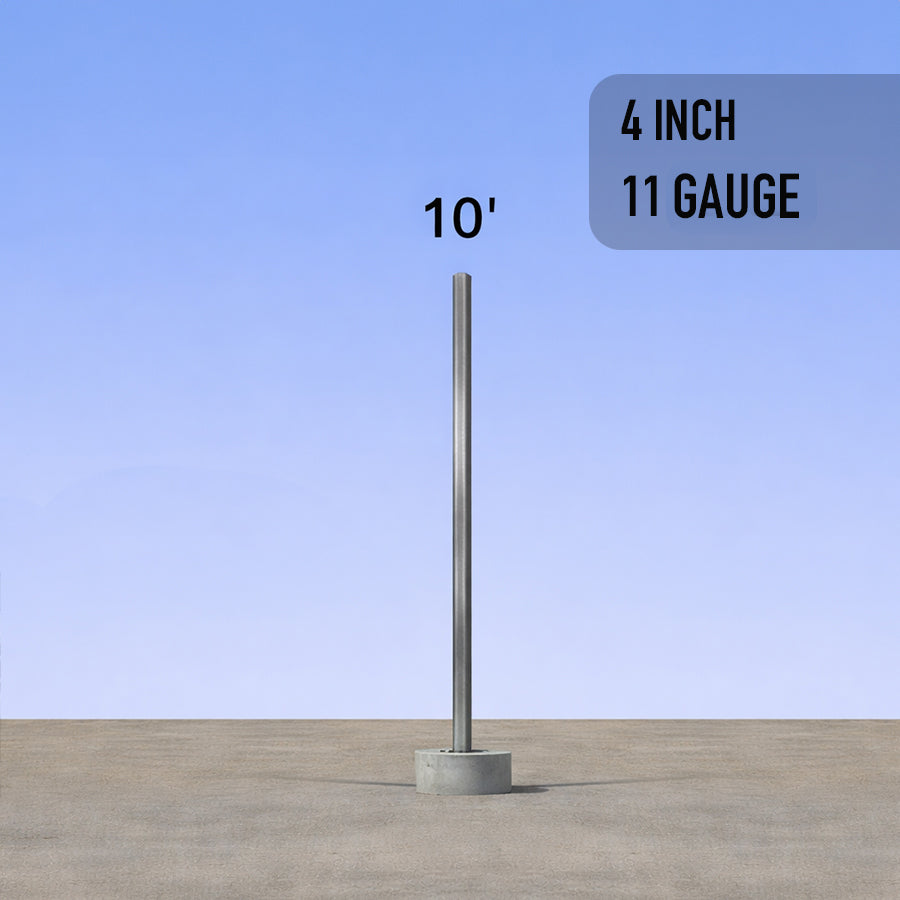
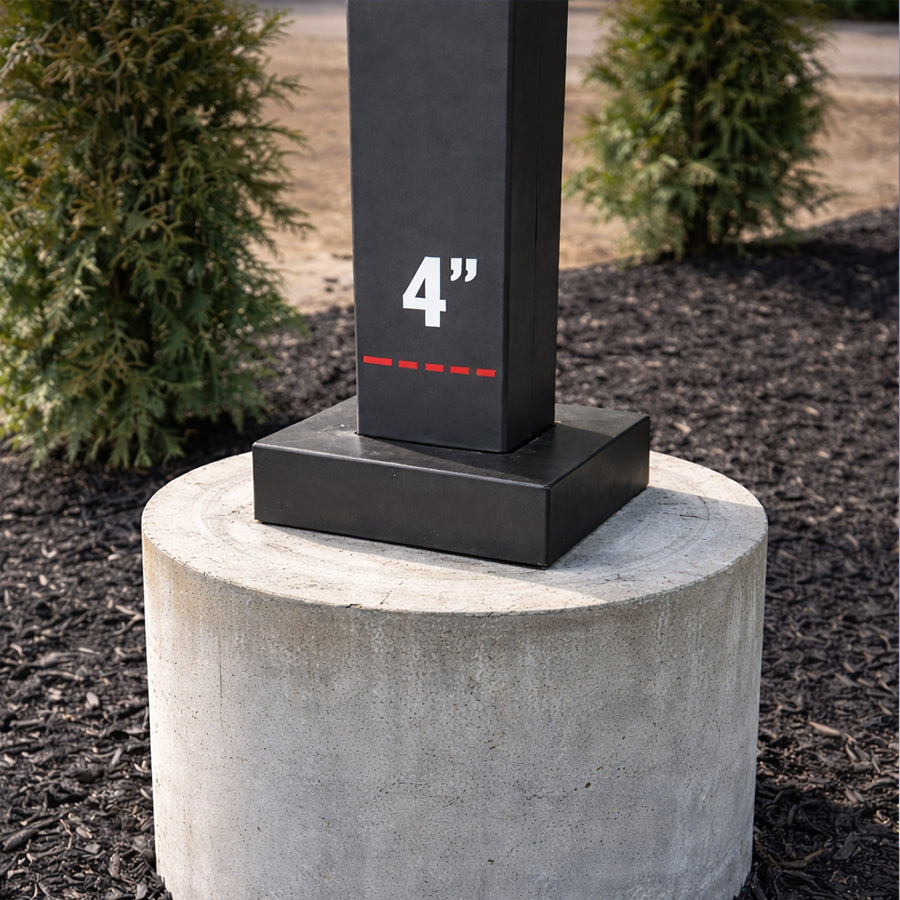
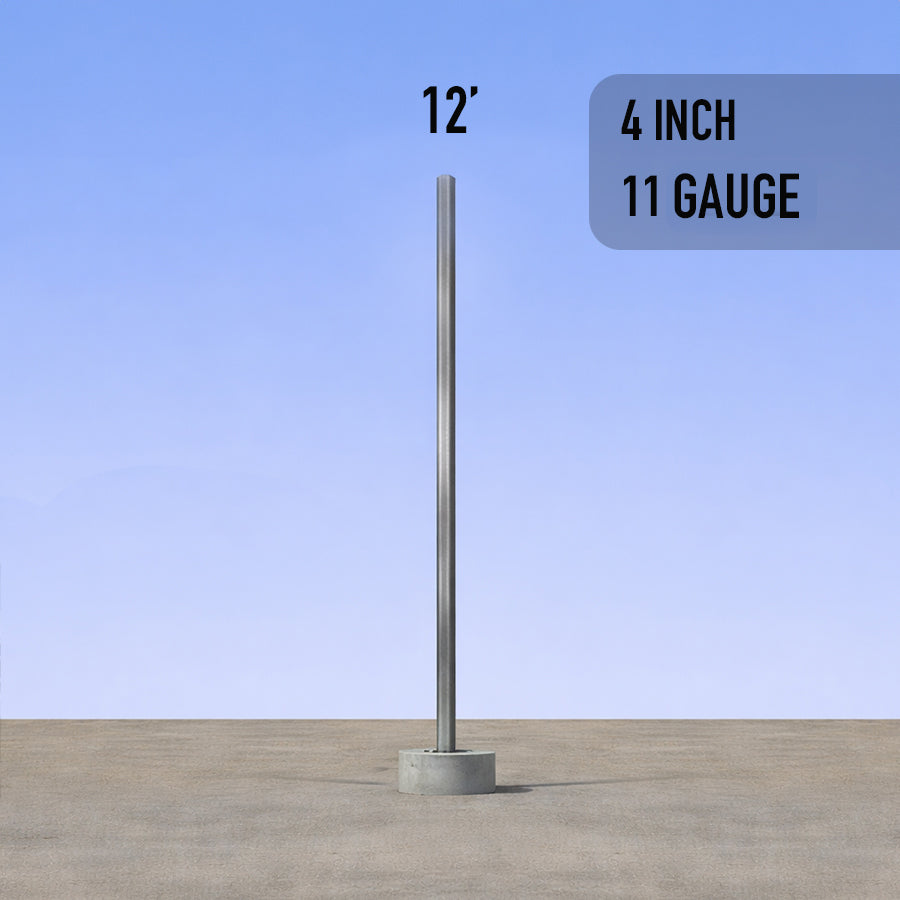
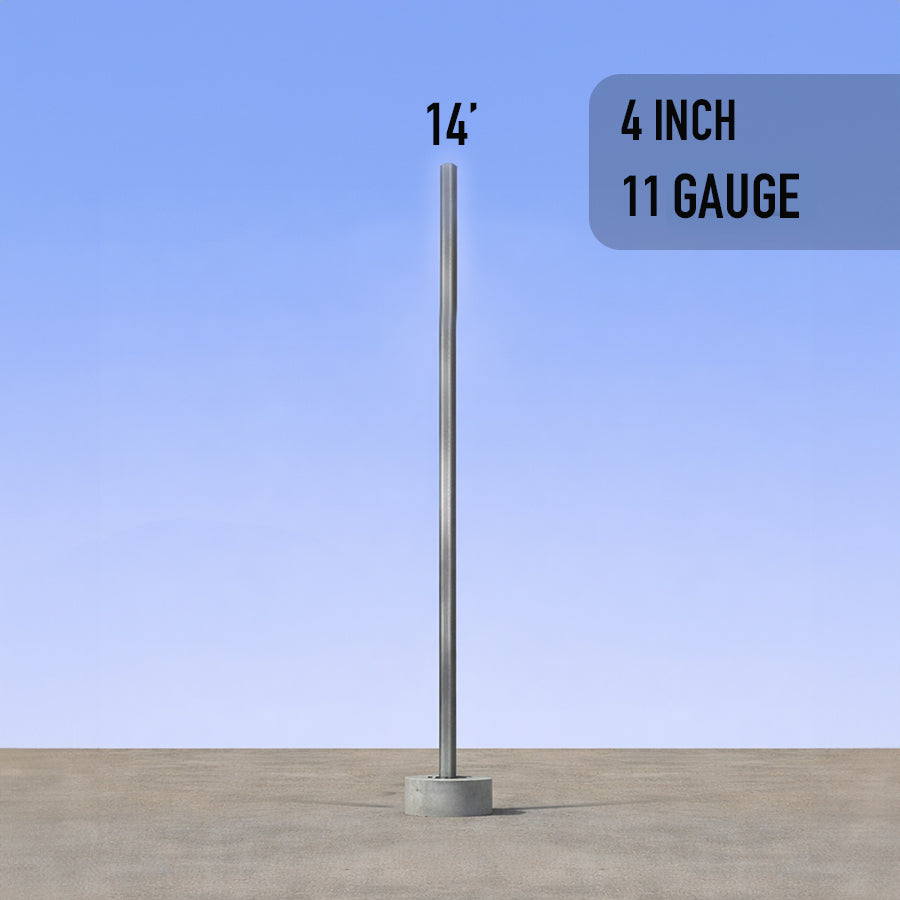
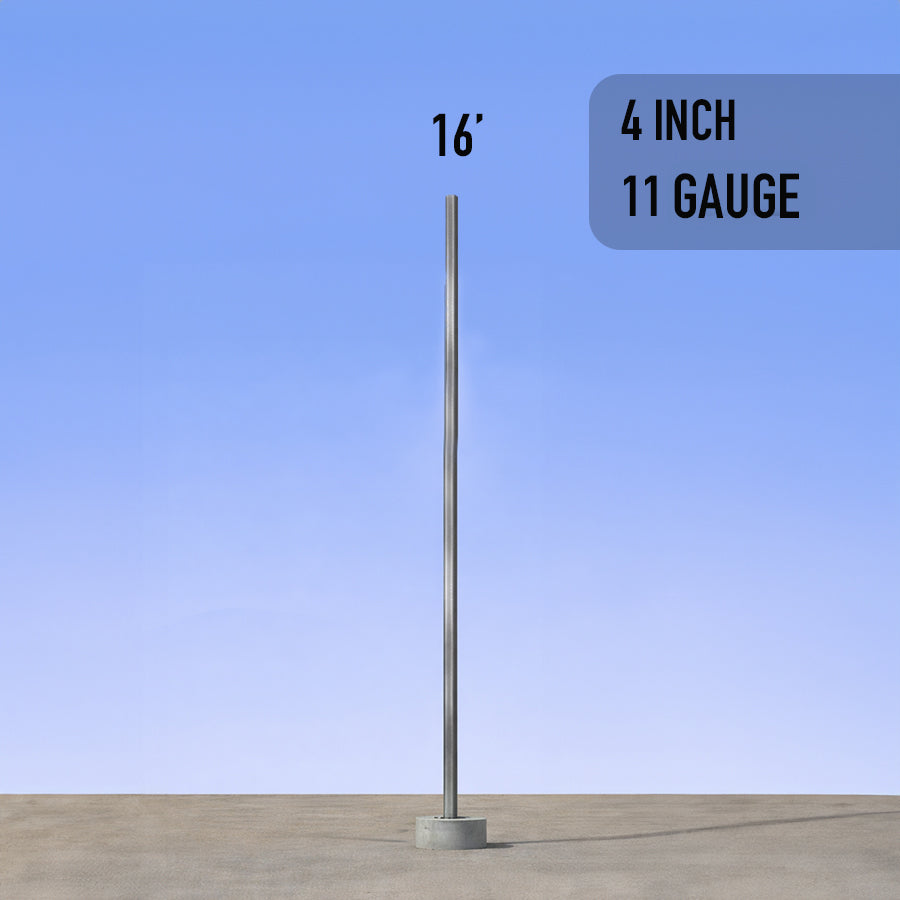
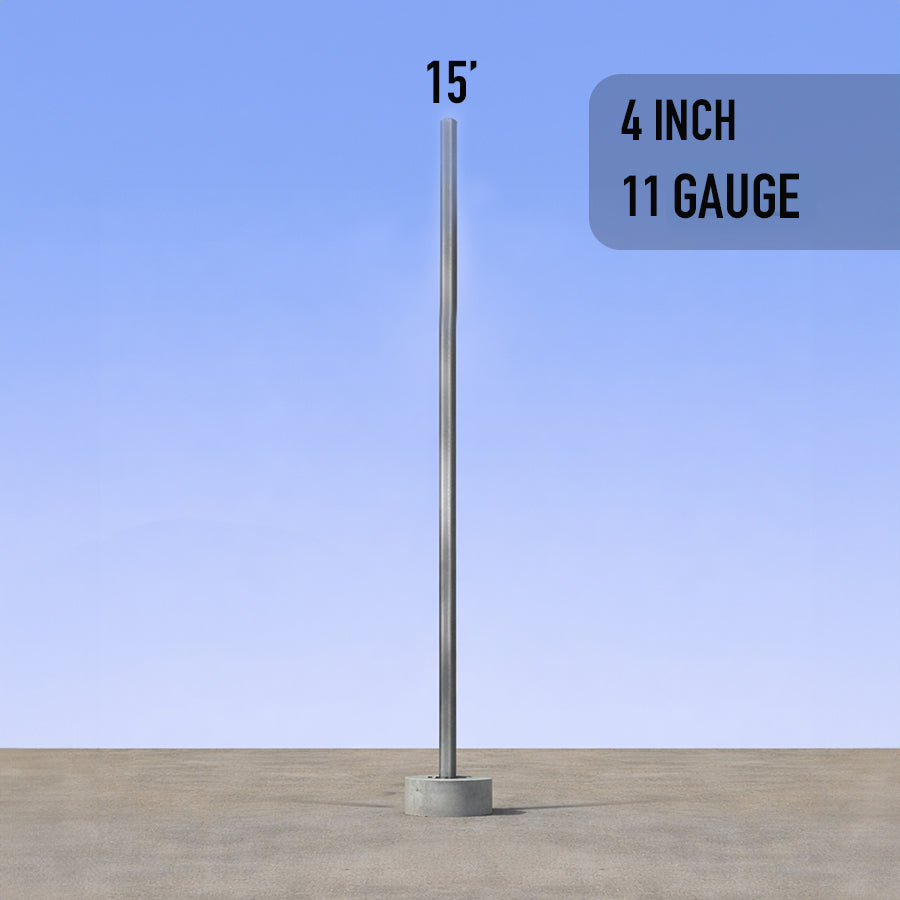
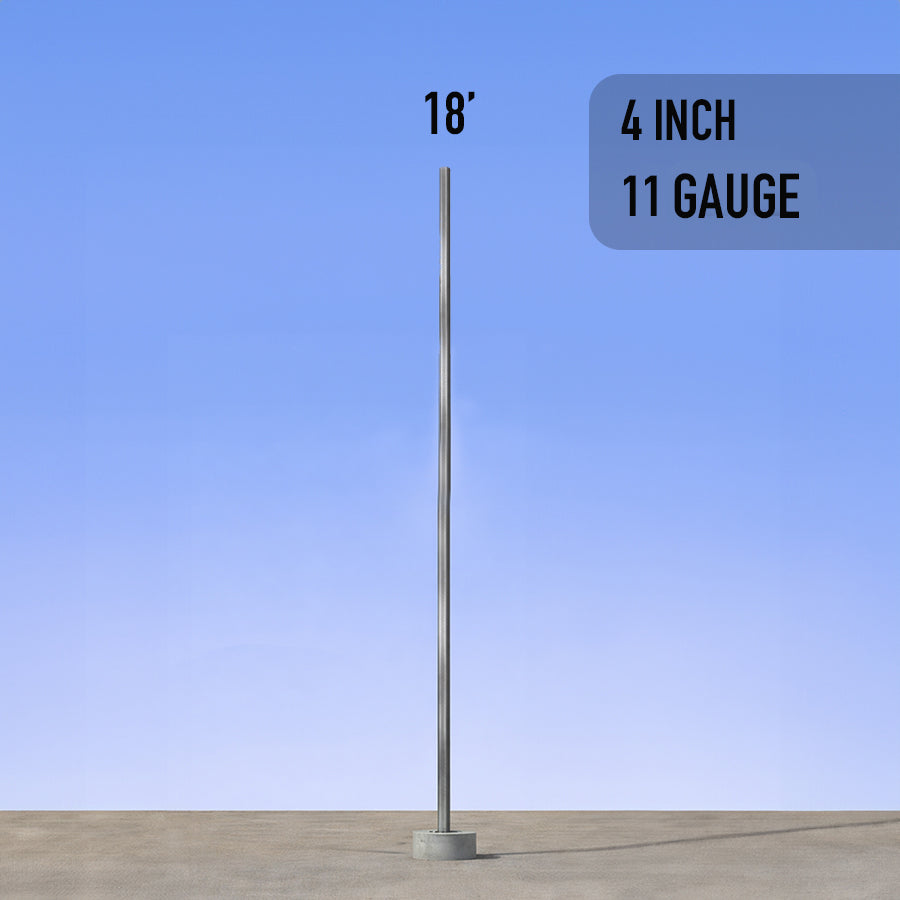
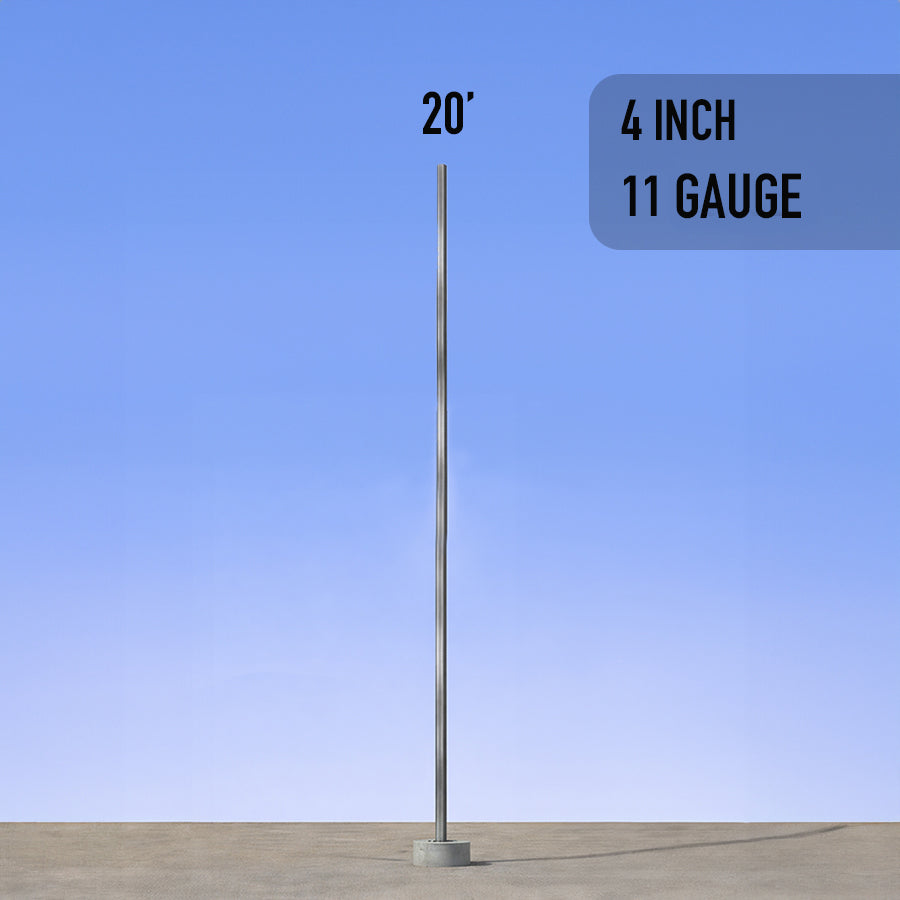
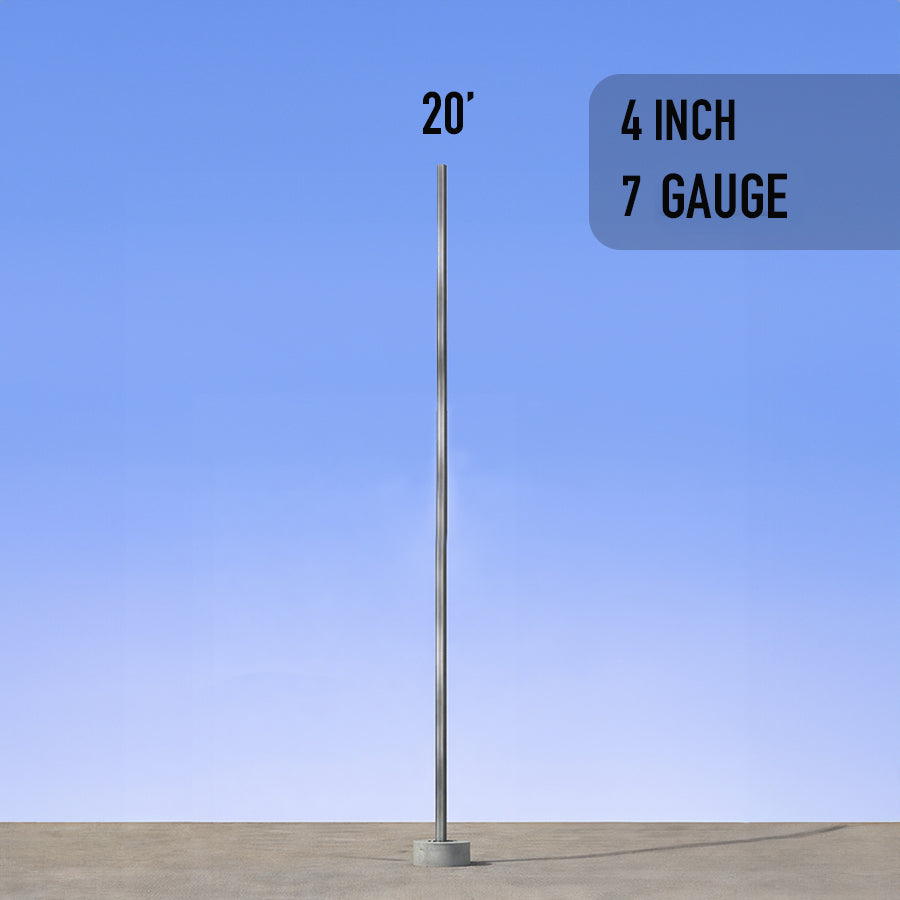
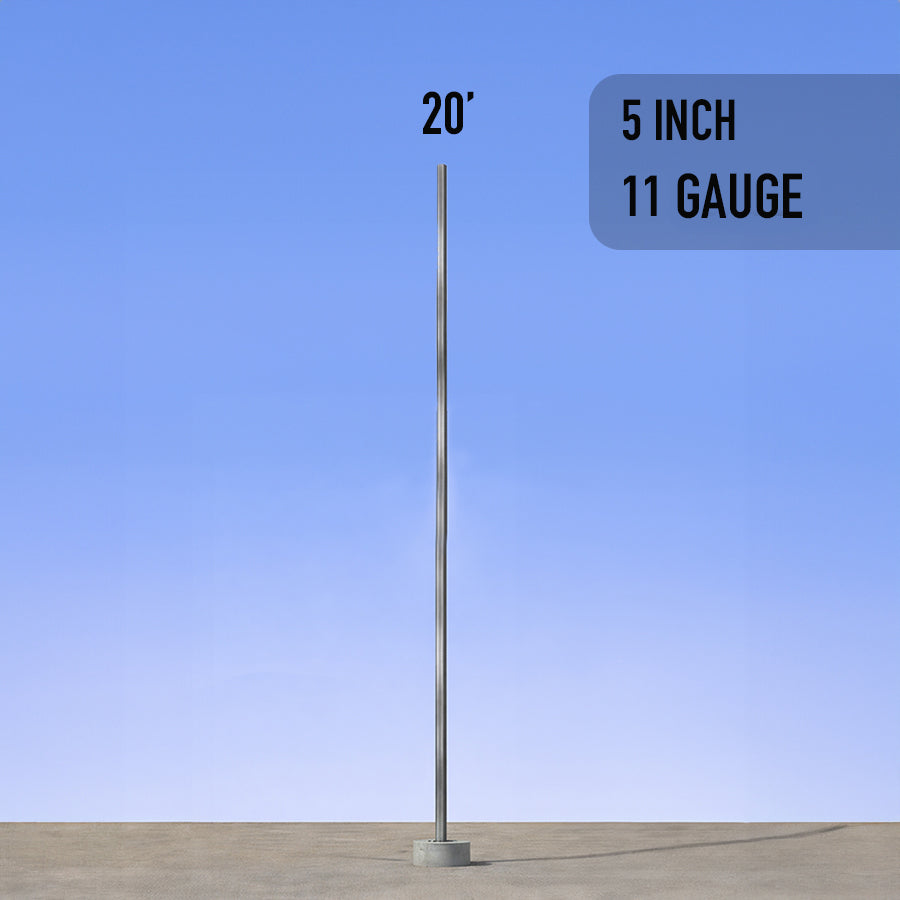
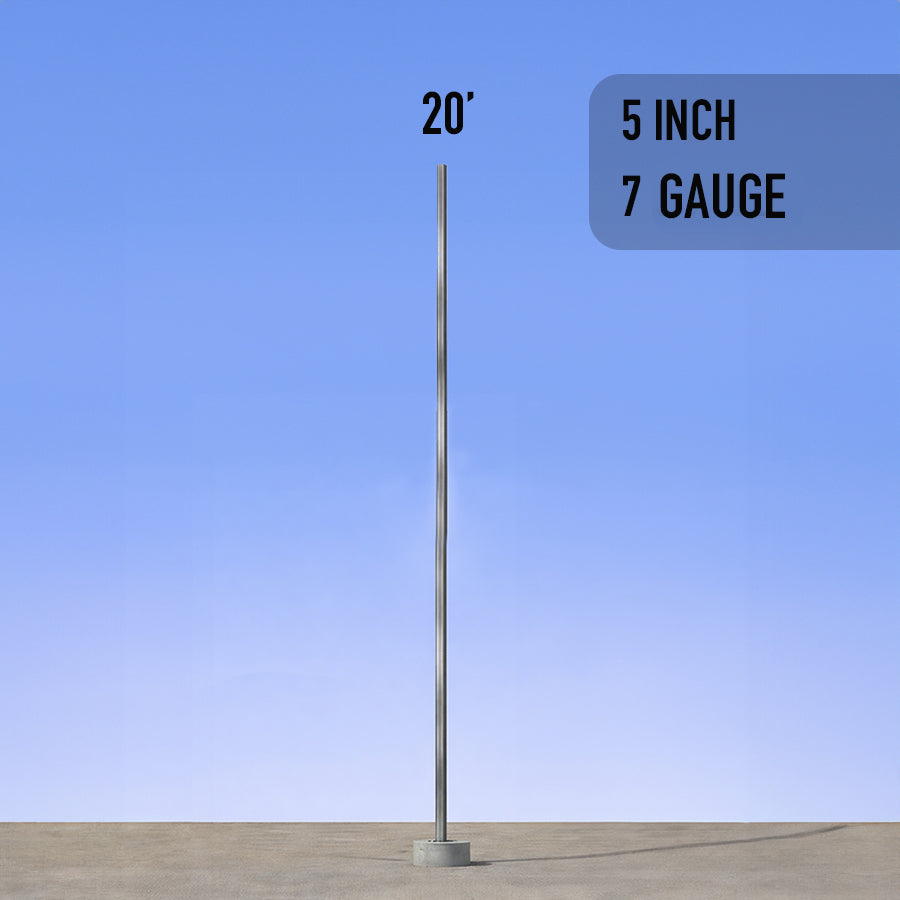
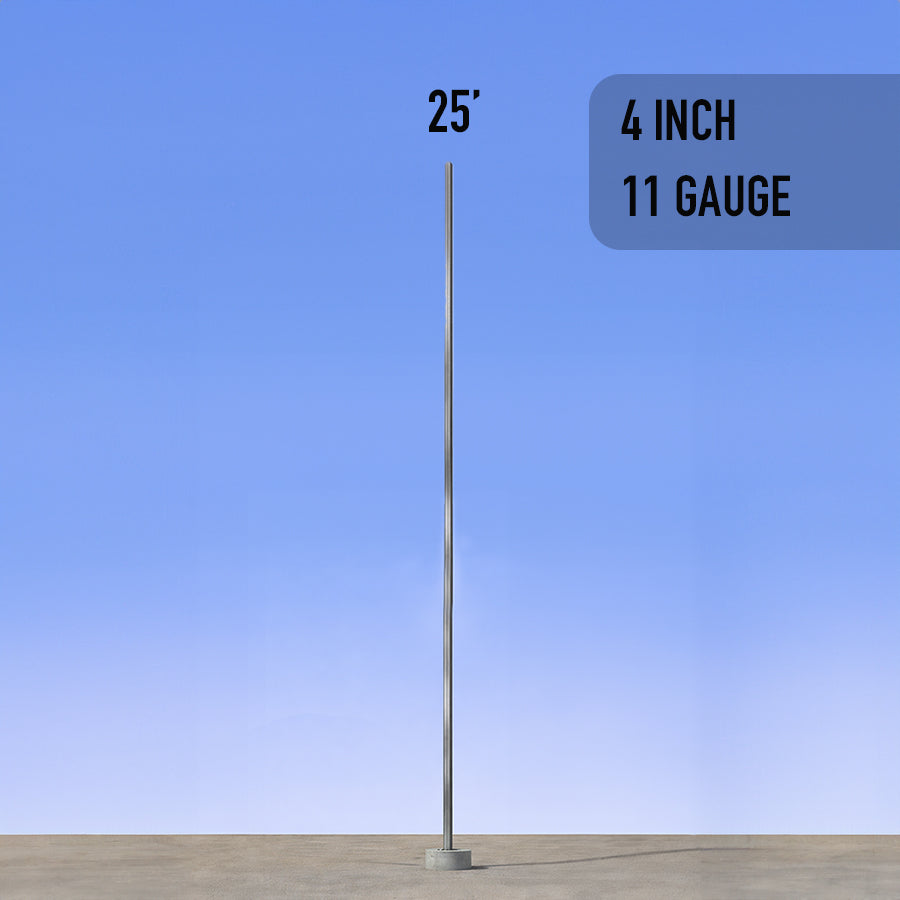
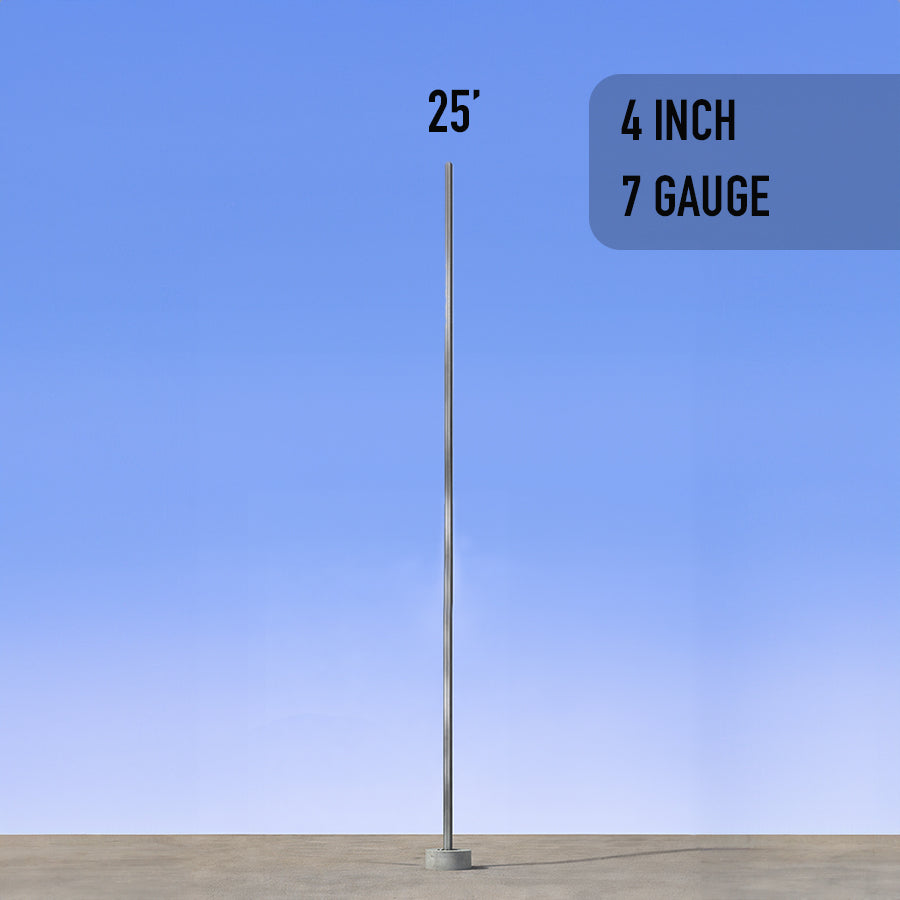
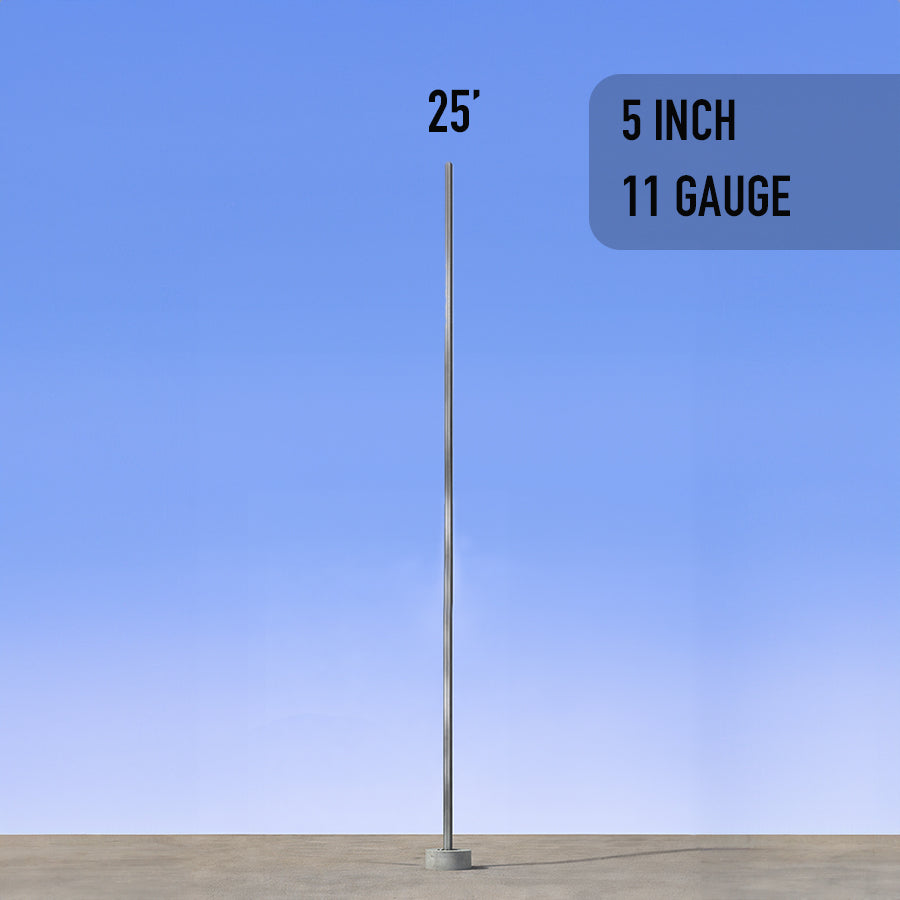
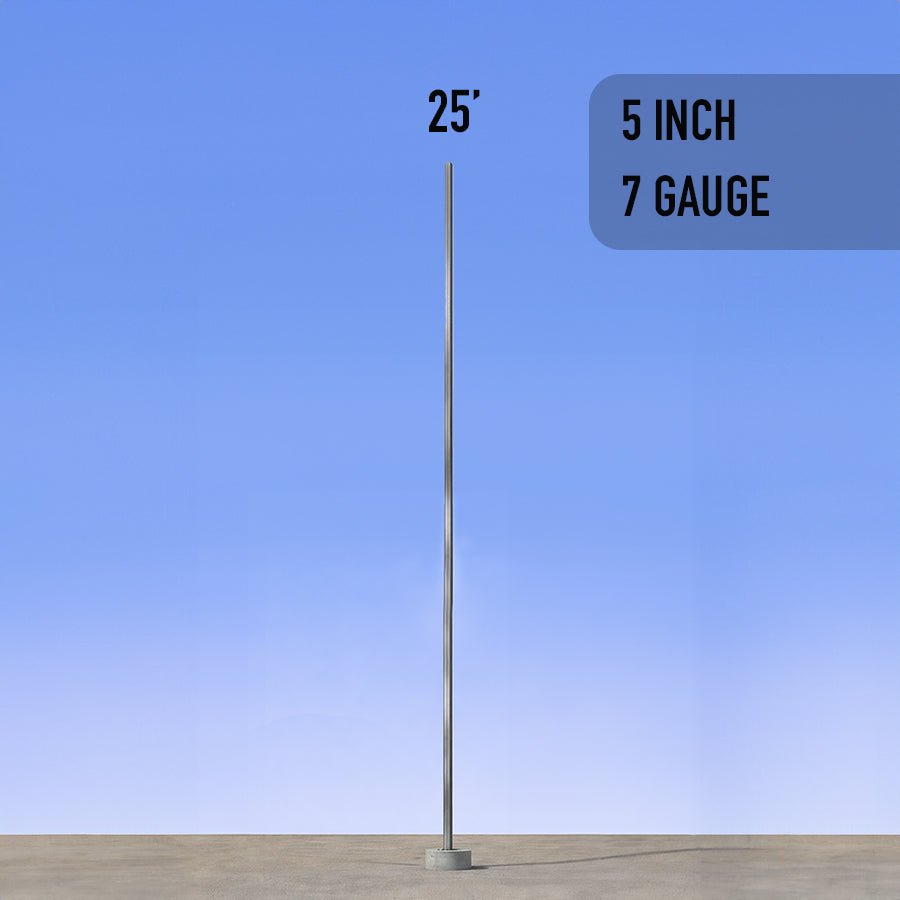
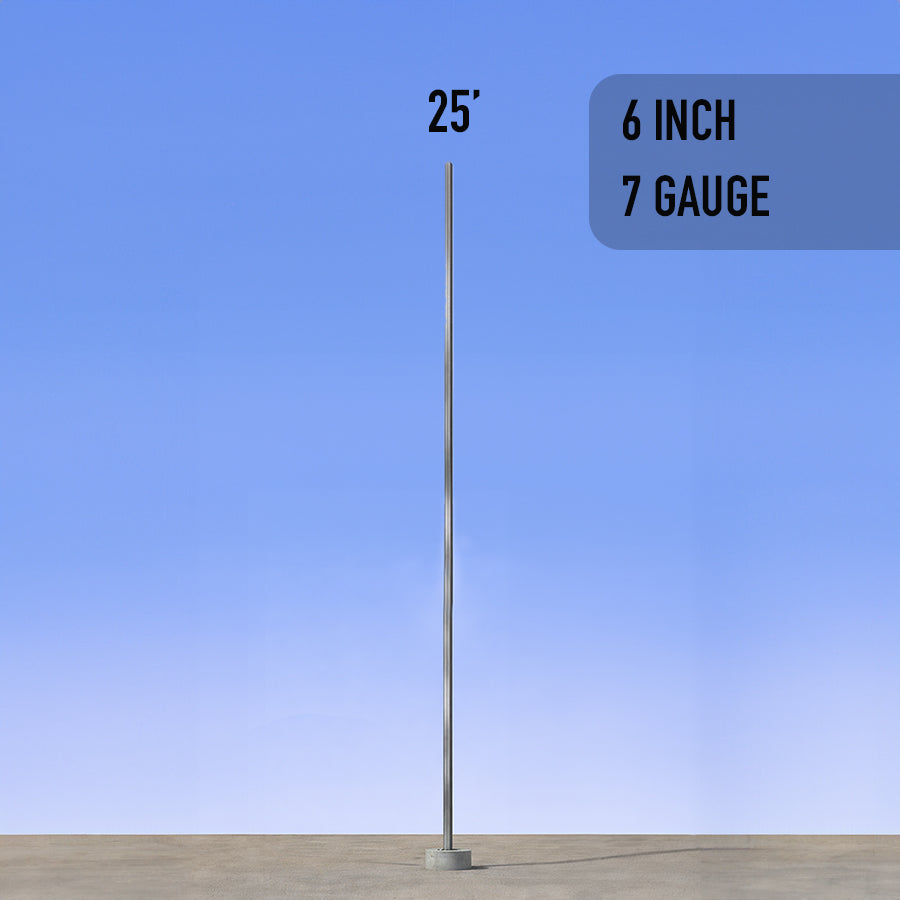
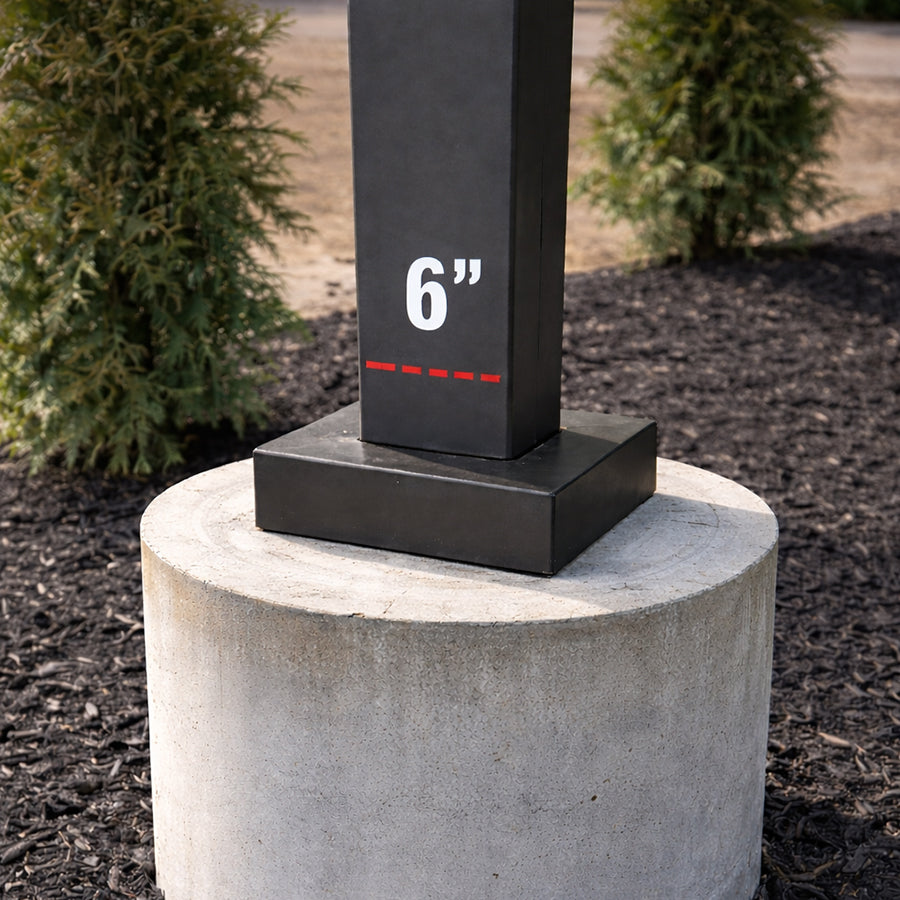
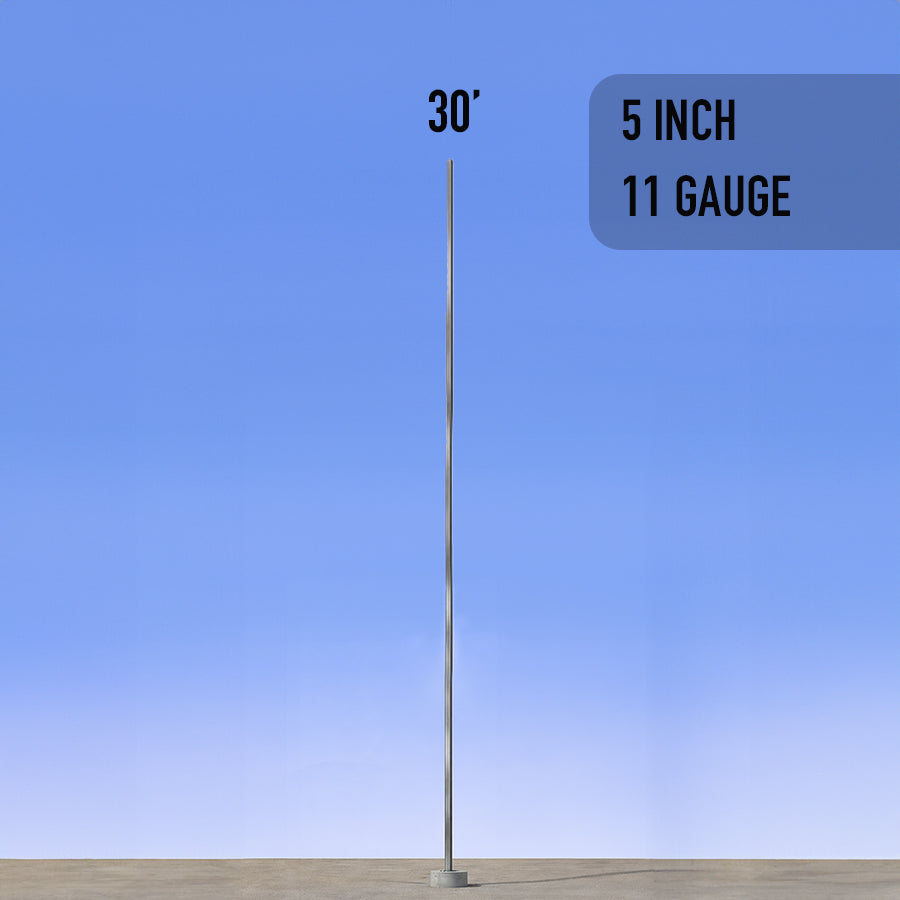
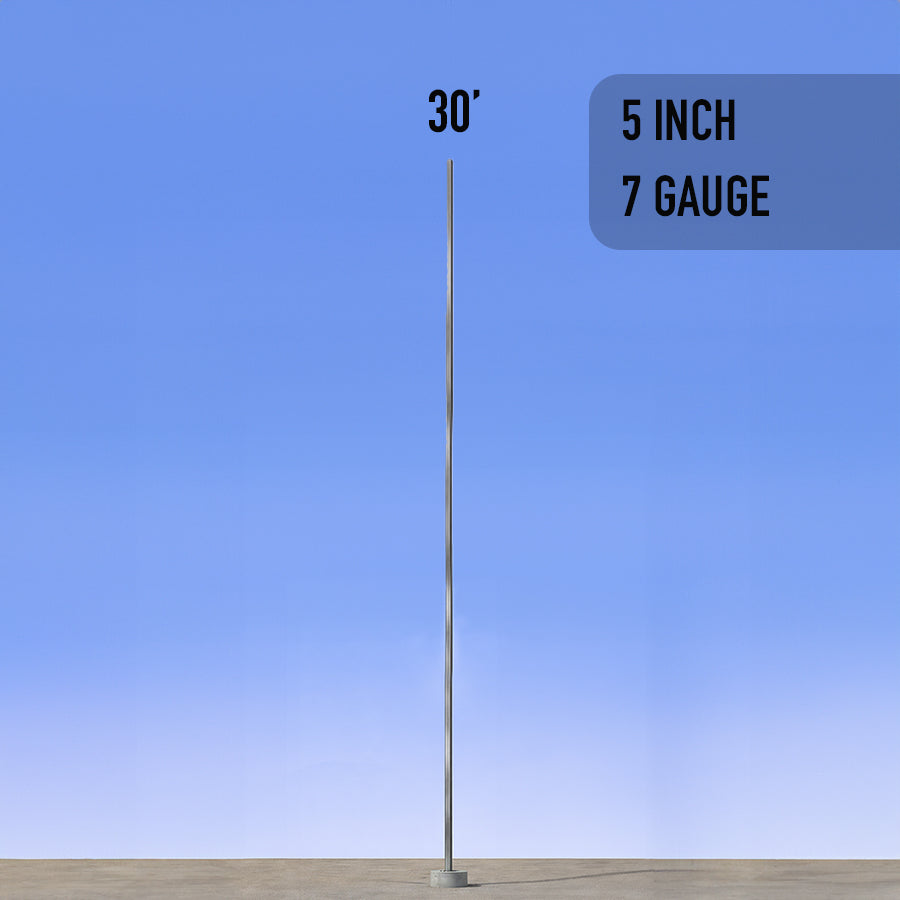
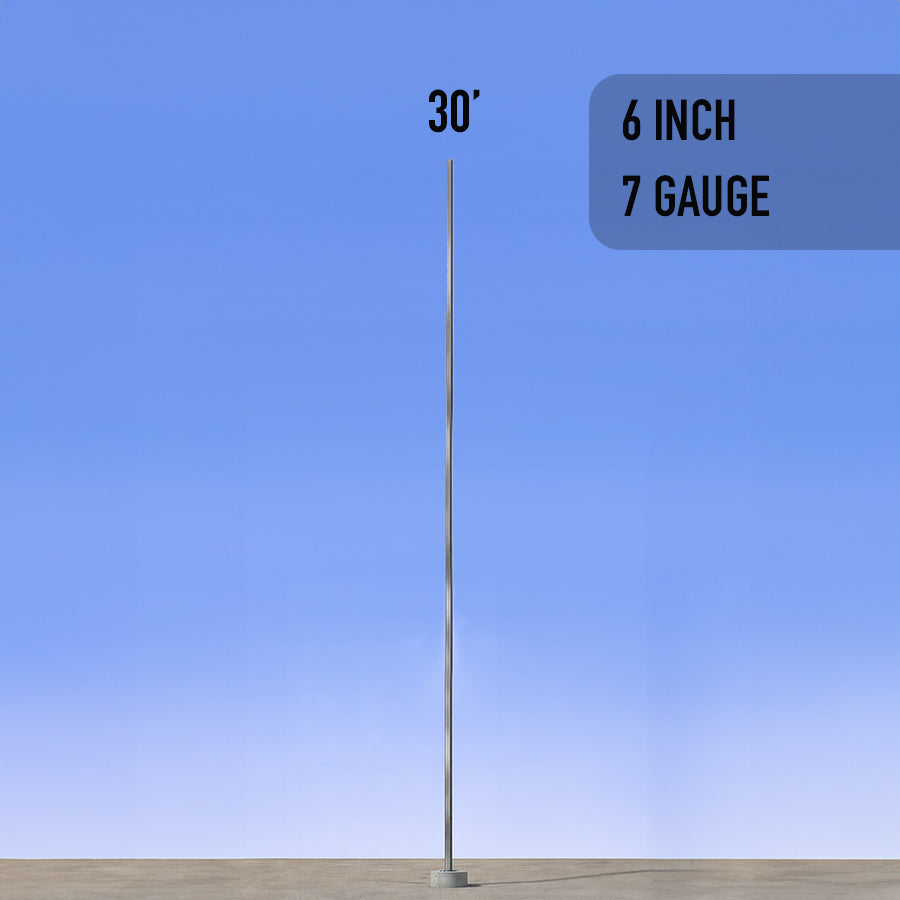
Our steel anchor base commercial parking lot light poles are built for installations where permanence, load capacity, and clean professional presentation matter. Square straight and square tapered profiles are available in 4", 5", and 6" diameter across 7 and 11 gauge wall thicknesses, from 10 feet up to 39 feet mounting height.
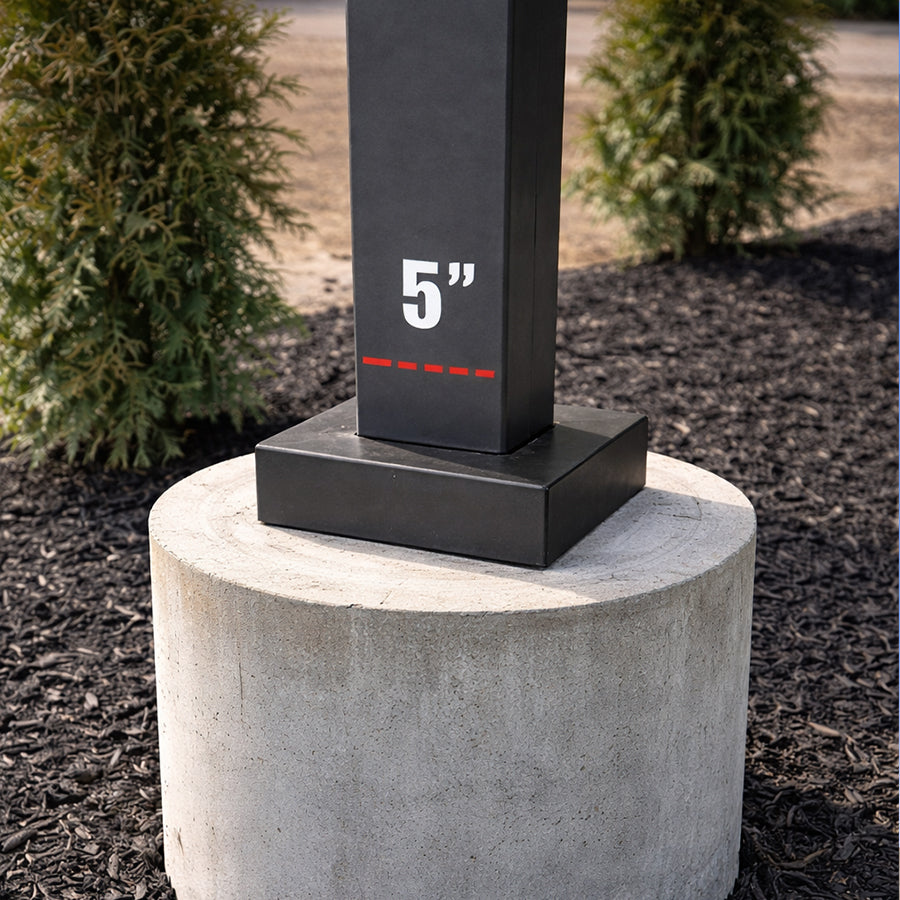
The anchor base design bolts to a pre-poured concrete foundation. That is the standard commercial installation method, and it keeps future pole replacement or repositioning straightforward without excavation. Heavier gauge options handle higher wind load ratings and larger fixture configurations. If you are lighting a large parking lot, a campus perimeter, or a municipal property where structural specs are part of the permit package, these are the commercial light poles built for that job.
Choose 11 gauge for standard applications. Step up to 7 gauge where wind exposure is significant, fixture weight is higher, or the project engineer requires it. The cost difference is small. The performance difference is not.
Fiberglass Direct Burial Commercial Light Poles
Different site, different solution. Our fiberglass direct burial poles are the right answer when corrosion resistance is non-negotiable. Coastal properties, marine environments, chemical-adjacent facilities, anywhere that steel's long-term performance in harsh conditions is a real concern.
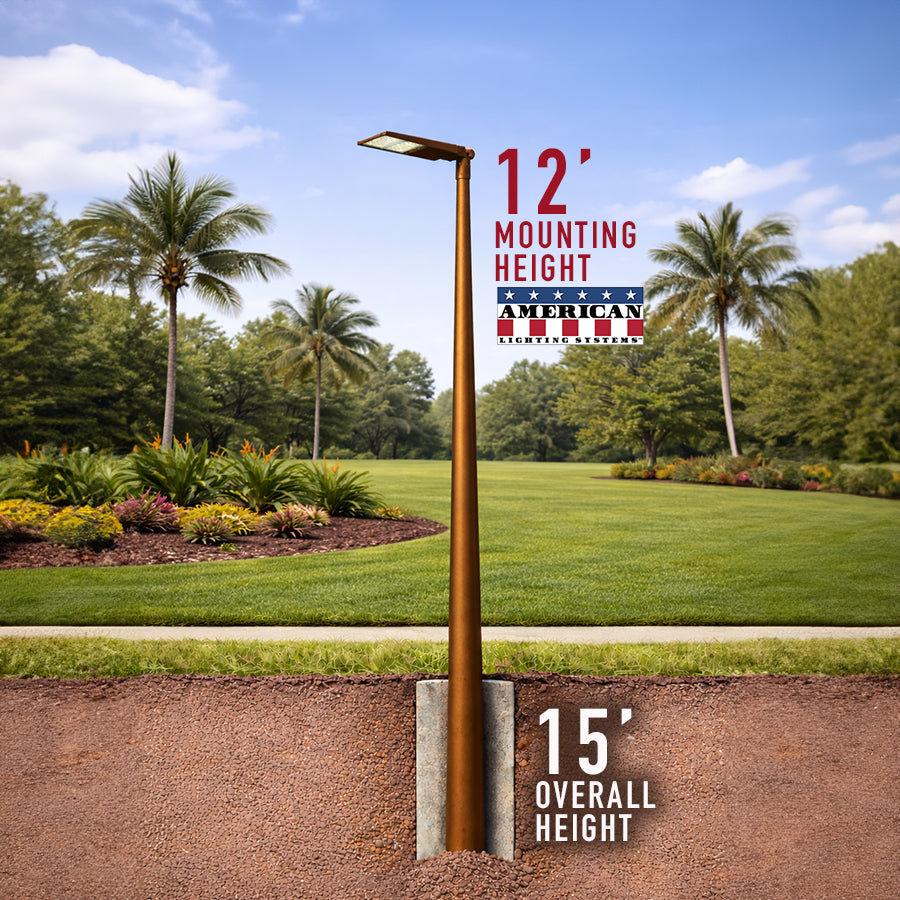
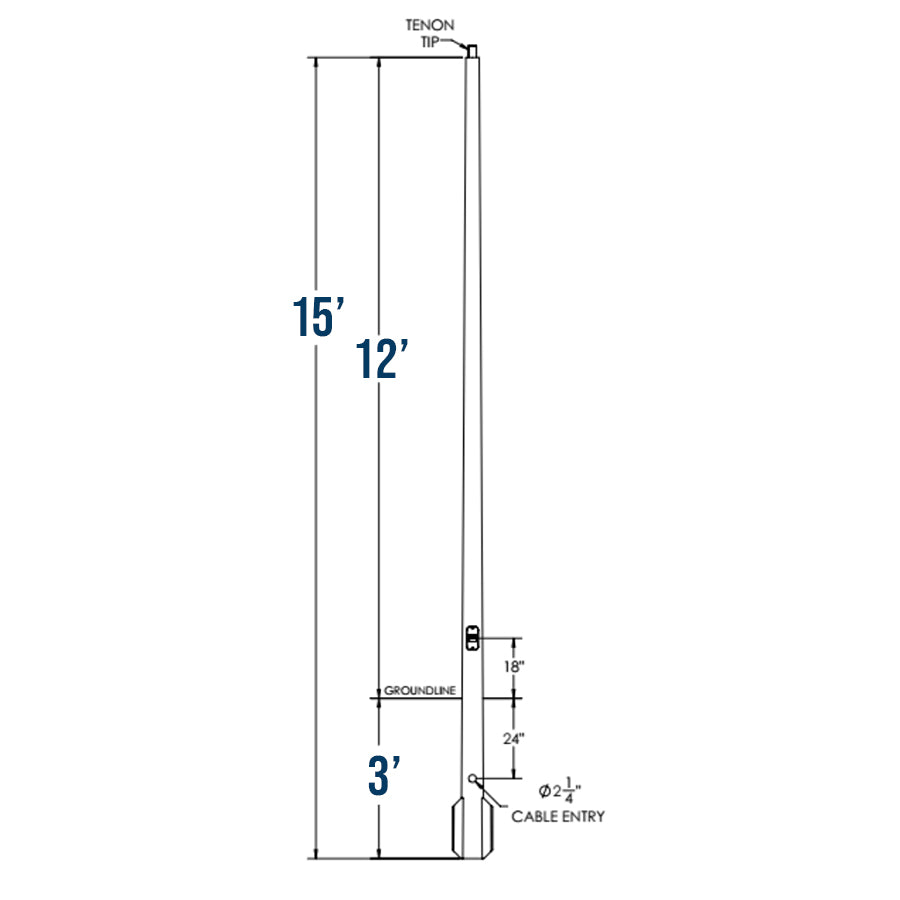
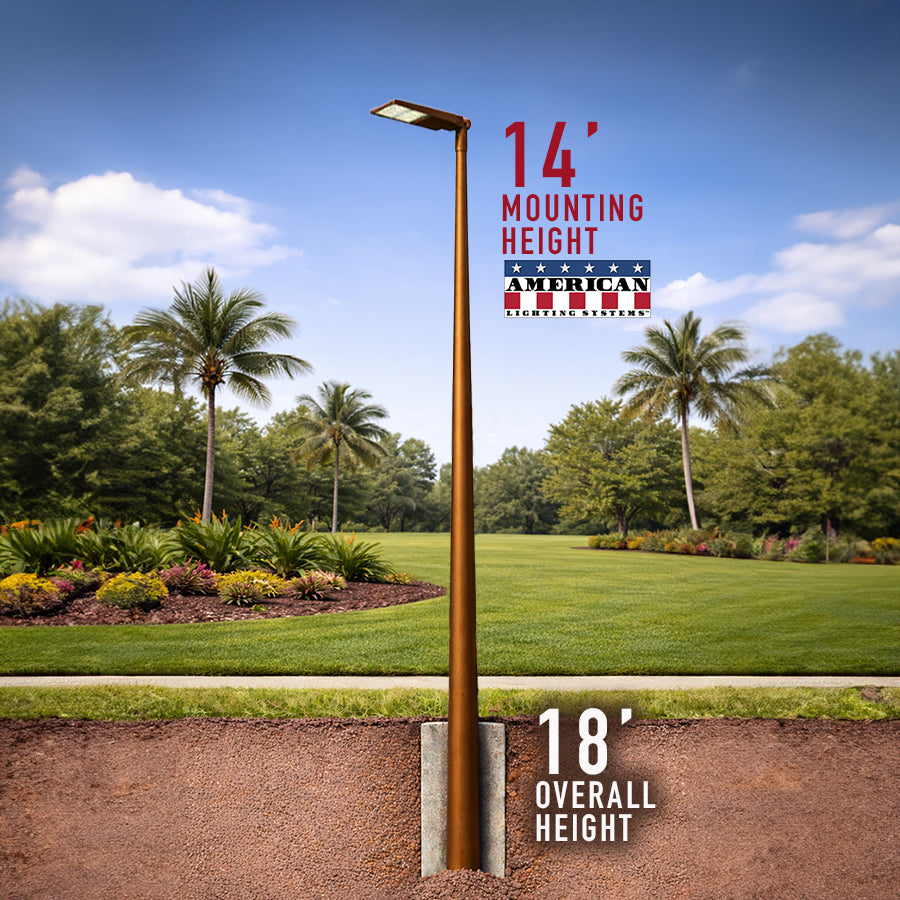
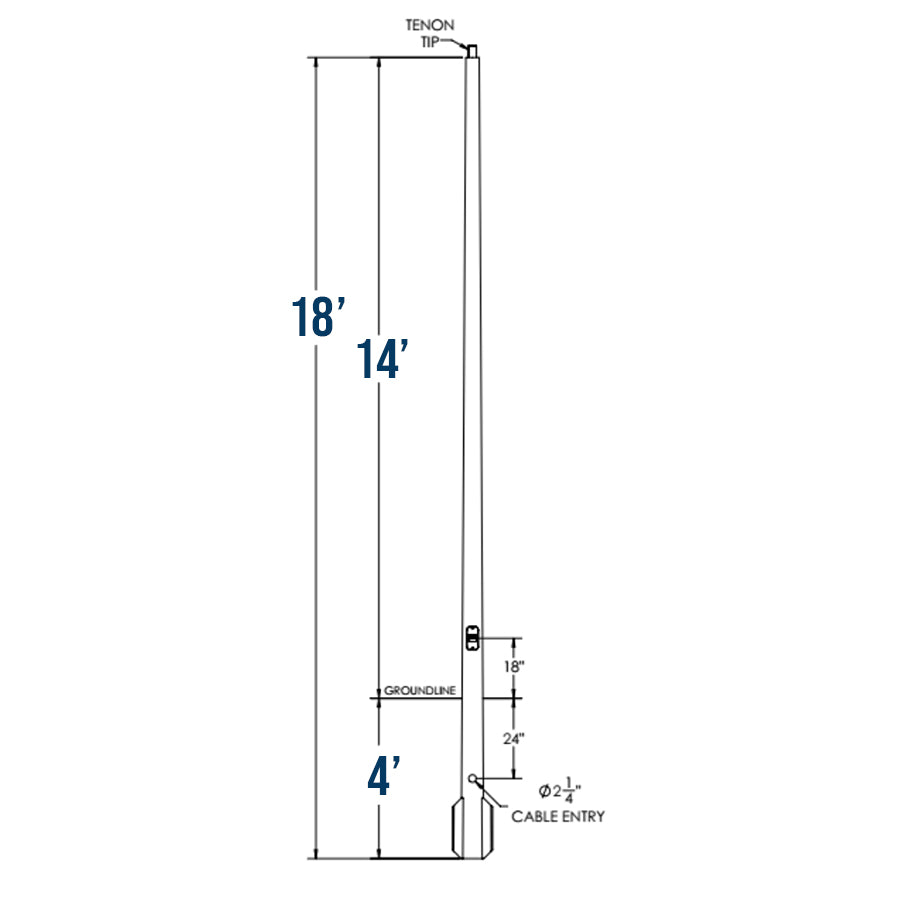
Direct burial means the commercial light post goes straight into the ground. No concrete base. Faster installation, fewer components. And fiberglass simply does not corrode. Available from 12 to 30 feet mounting height, these poles carry a lower lifetime maintenance burden than steel in the environments they were designed for.
How Do You Choose the Right Commercial Light Pole Height and Gauge?
Commercial light pole height and fixture output work together. You cannot optimize one without considering the other. Taller poles cover more ground per fixture, which means fewer poles and fewer foundations, but they require higher-output fixtures to maintain footcandle levels at grade. Shorter poles give you tighter control in constrained layouts but need closer spacing to avoid dark spots.
As a starting point, parking lots commonly use 20 to 30 foot commercial light poles with spacing calculated from fixture distribution curves. Walkways and pedestrian areas typically run 12 to 20 feet depending on width and required light levels. Large perimeter applications or roadway-adjacent sites may call for 30 feet and above.
Gauge selection comes down to wind exposure, fixture weight, and local code. When in doubt, step up. The cost difference between 11 and 7 gauge is minor. The cost of a pole failure and the liability that comes with it is not.
What Hardware Do You Need to Complete a Commercial Light Post Installation?
A commercial light post is the start, not the finish. Most installations also require mounting hardware to connect the fixture to the pole correctly. We carry the full range: tenon adapters for single-fixture slip-fit mounting, bullhorn mounts for two-fixture coverage, and spoke brackets for multi-arm configurations where one pole needs to serve multiple directions.
Match your pole top to the right adapter and fixture mounting style before you order. It saves time. It saves return freight. And it saves the kind of job site frustration that ends up in a phone call nobody wants to make.
Most Common Questions About Commercial Light Poles
What is the right commercial light pole height for a parking lot?
It depends on fixture output, lot dimensions, and required footcandle levels. Poles and fixtures need to be selected together for the coverage to work. If you need help running through the numbers, call us. That is exactly what we are here for.
What is the difference between direct burial and anchor base commercial light poles?
Anchor base commercial light poles bolt to a pre-poured concrete foundation. Direct burial poles go straight into the ground without a base. Anchor base is the standard for most commercial installations. It is structurally sound, permits-friendly, and easier to service or replace over time. Direct burial fiberglass is the right call where corrosion resistance is the priority, or where a faster and simpler installation matters most.
What gauge commercial light pole do I need?
11 gauge handles the majority of standard commercial applications. 7 gauge is the right choice for taller poles, heavier fixtures, high wind zones, or wherever the spec sheet calls for it. When in doubt, step up. The cost difference is small. The consequences of under-specifying are not.
What is the standard height for a commercial light post?
Most commercial light post installations run between 20 and 30 feet for parking lots and large open areas. Walkways and pedestrian zones typically use 12 to 20 foot poles. The right height depends on your fixture's beam distribution, spacing requirements, and the footcandle levels your application demands.
How far apart should commercial light poles be spaced?
Spacing depends on pole height, fixture output, and beam angle. A common starting point for parking lots is a spacing-to-mounting-height ratio between 3:1 and 4:1, but this varies by fixture. Always base spacing decisions on a photometric layout. Not a rule of thumb.
What is the best material for a parking lot light pole?
Steel is the standard for the vast majority of commercial parking lot light pole applications. It handles heavy loads, meets structural specs, and is available in the gauge and profile options most commercial projects require. Fiberglass is the better choice in coastal, marine, or corrosive environments where long-term steel maintenance is a real concern. The best material is the one matched to your site conditions. Full stop.
Can commercial light poles be used for sports lighting?
Yes, though sports lighting applications typically require taller poles, often 30 feet and above, along with specific structural ratings to handle larger and heavier fixtures. Pole selection for sports applications should always be paired with a photometric plan and, where required, a structural engineering review.
What foundation is required for an anchor base commercial light pole?
Anchor base commercial light poles require a concrete foundation with embedded anchor bolts sized to the pole's base plate. Foundation depth, bolt pattern, and concrete specifications depend on pole height, wind load requirements, and local soil conditions. A structural engineer or your local authority can provide the spec for your specific application.
How long do commercial light poles last?
A properly specified and installed commercial light pole can last 25 to 40 years or more. Steel with the right coating, or fiberglass matched to the right environment, will stand through decades of exposure without issue. Longevity comes down to one thing: choosing the right pole for the environment upfront.
Do commercial light poles come with mounting hardware?
Poles are sold separately from brackets and adapters, so you can configure the right hardware for your specific fixture and layout. Browse our Brackets and Adapters collection, including tenon adapters, bullhorn mounts, and spoke brackets, to complete the package.
Can I get help selecting the right commercial light pole for my project?
Absolutely. Share your site conditions, mounting height requirements, fixture type, and any relevant structural or code specifications, and our team will help you identify the right pole, gauge, and hardware configuration.
Why Does the Commercial Light Pole Decision Matter More Than Most People Think?
Most contractors and facility managers spend 95% of their planning time on the fixture and 5% on the pole. Then the commercial light post fails. Or the height is wrong. Or the installation method does not match the site. And suddenly the pole is the only thing anyone is talking about.
The system you are building will stand outside for 20 or 30 years. The poles need to be there for all of it. Quietly holding up fixtures through rain, heat, ice, and everything in between, without drama, without maintenance calls, without failure.
That is what a well-chosen commercial light pole delivers. And it is what we stock.
Browse our full selection of steel anchor base and fiberglass direct burial commercial light poles below, or contact our team to discuss your project.