Steel Direct Burial Light Poles for Commercial & Industrial Sites
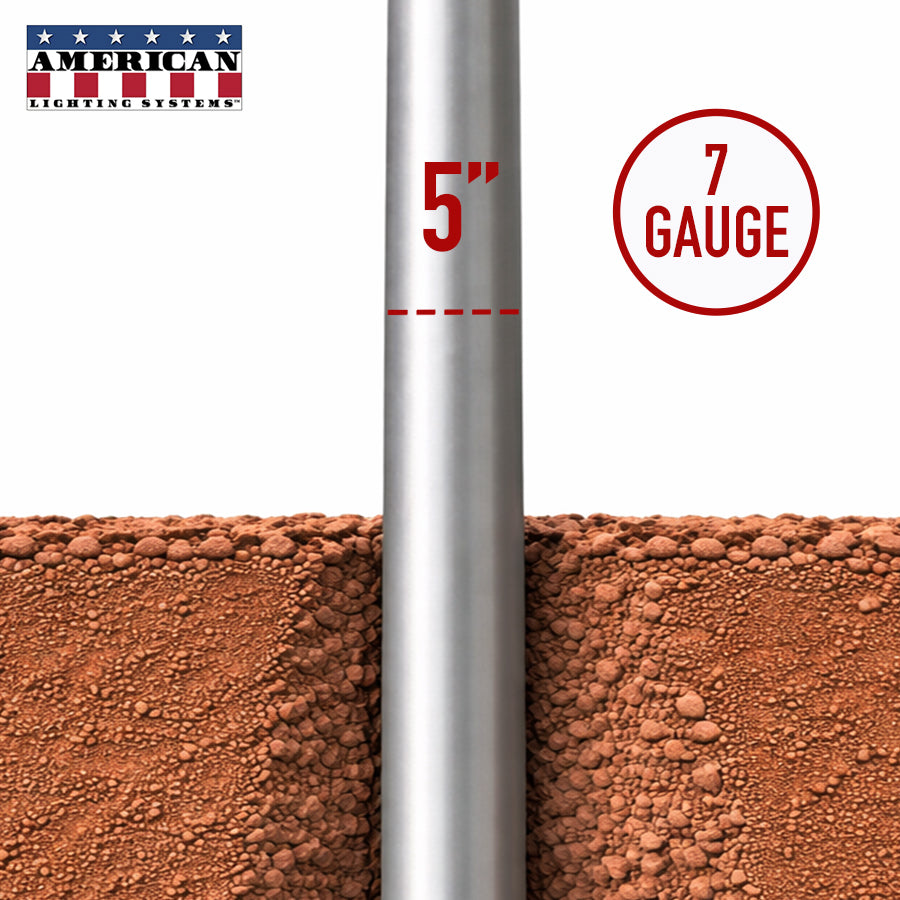
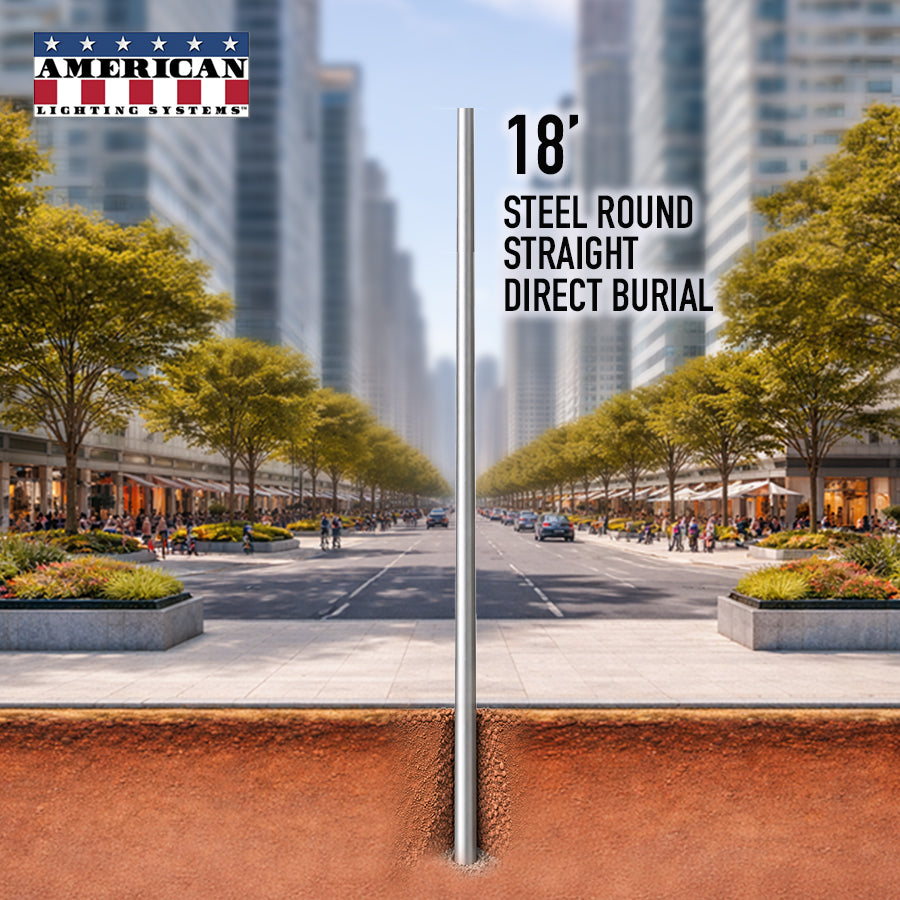
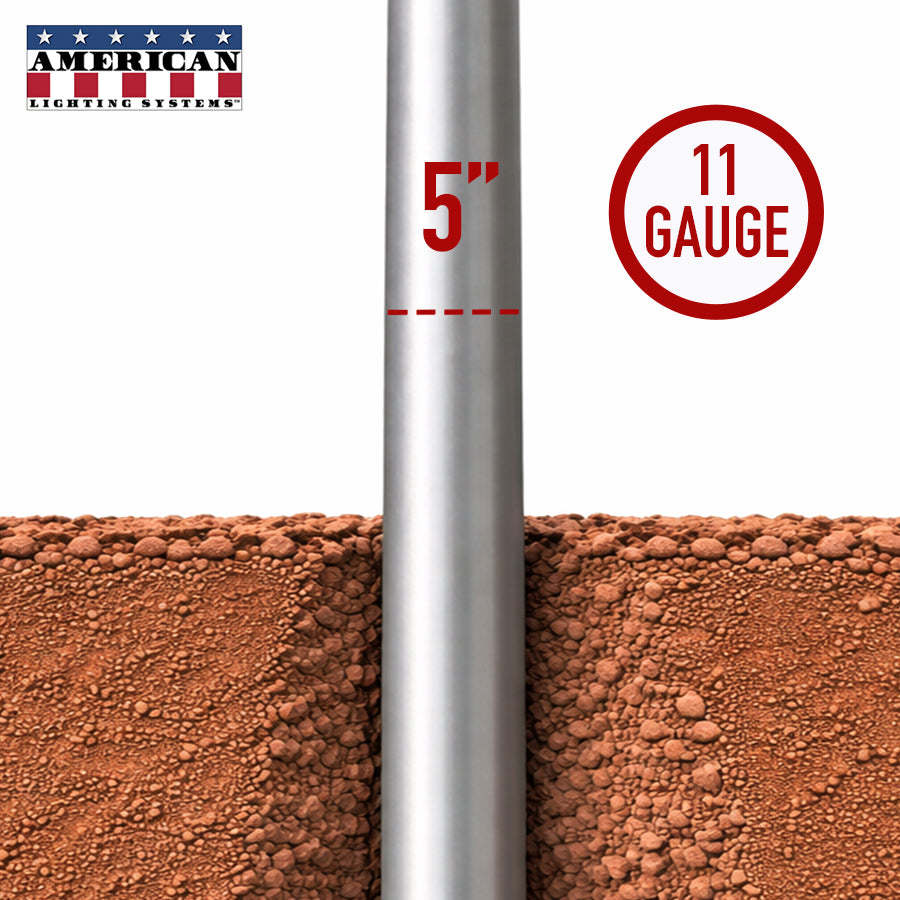
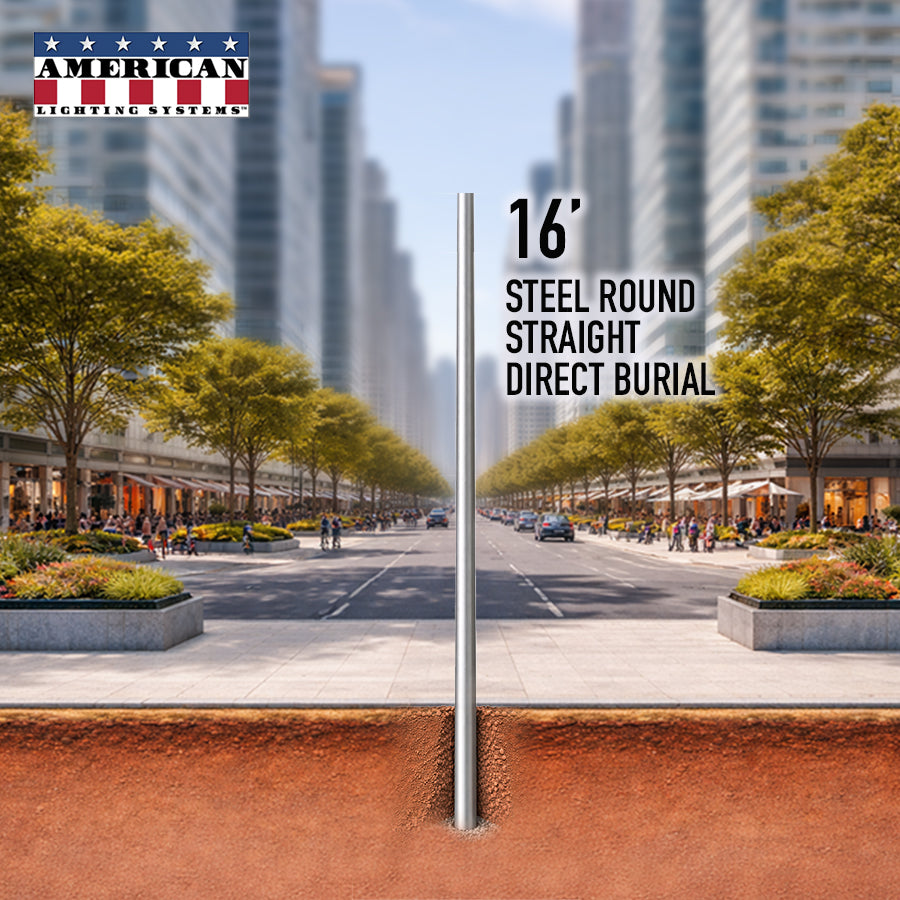
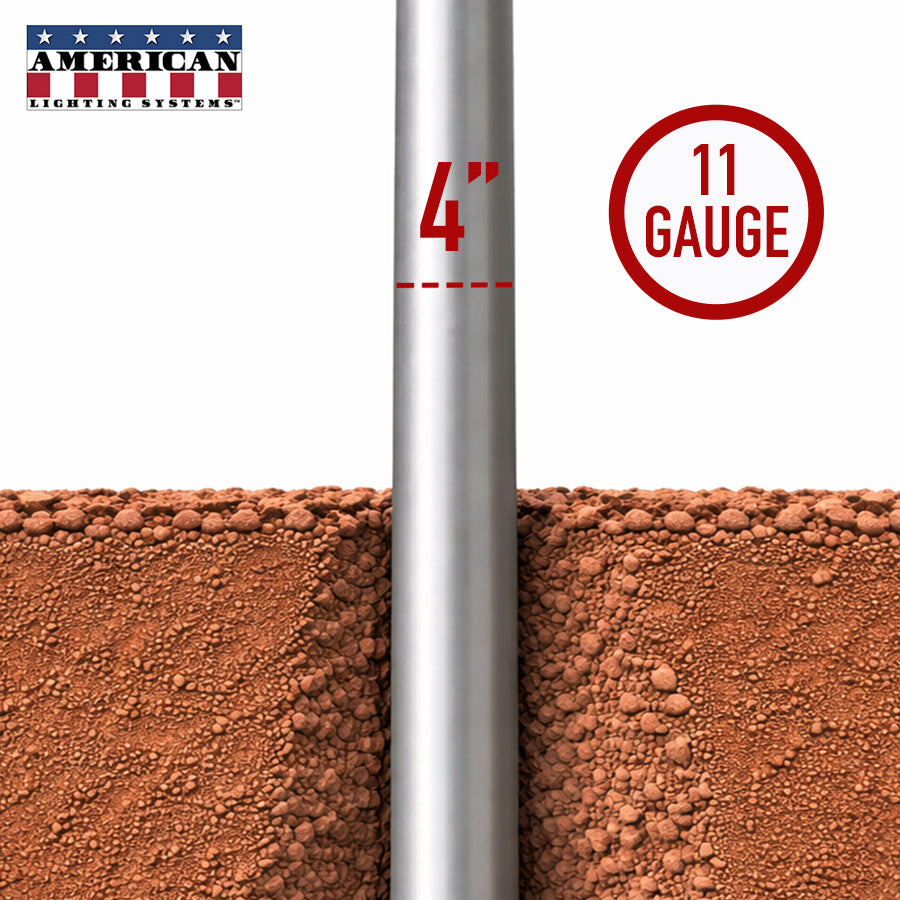
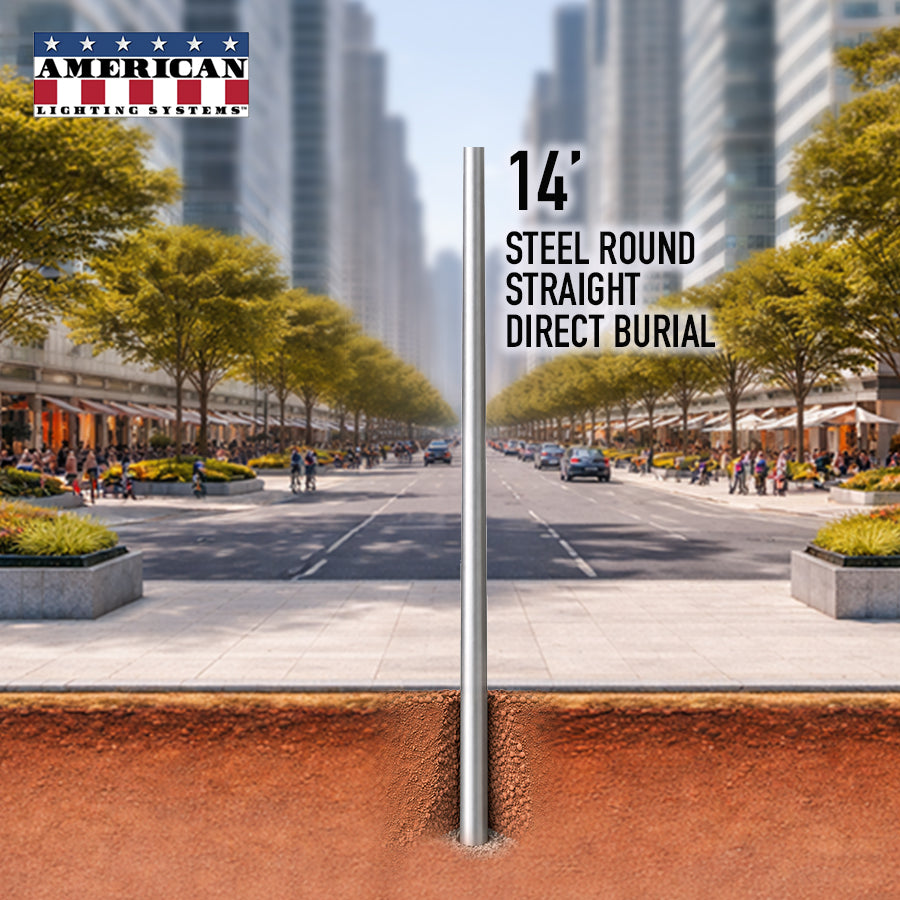
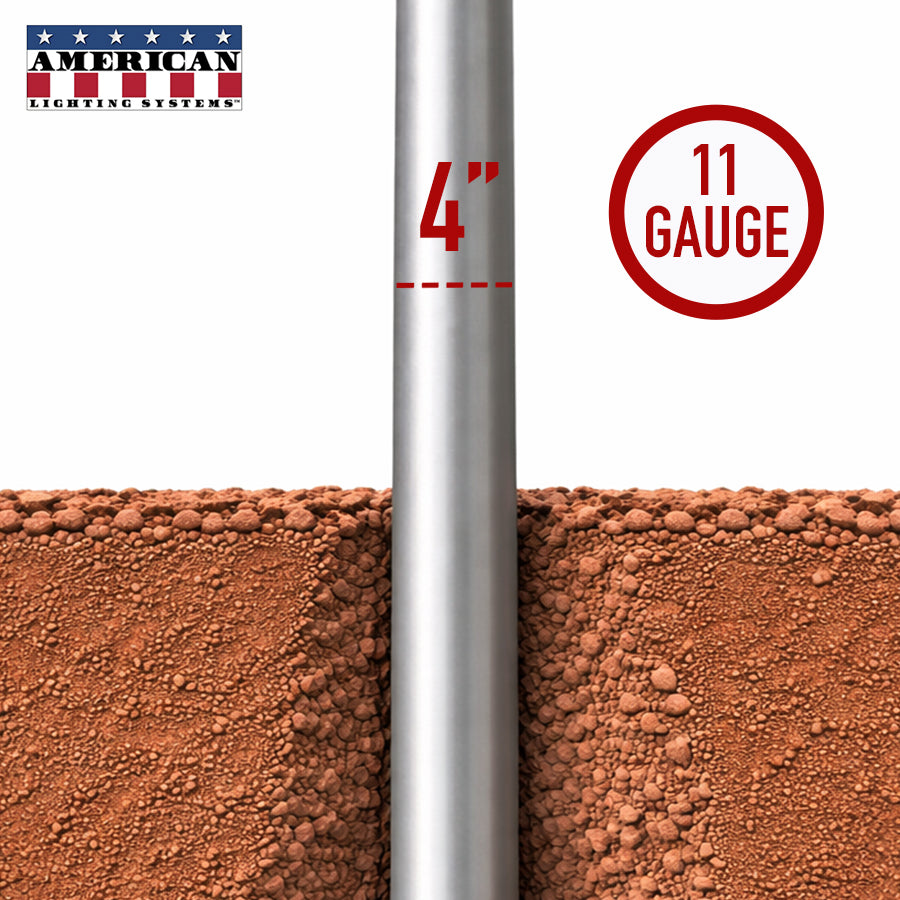
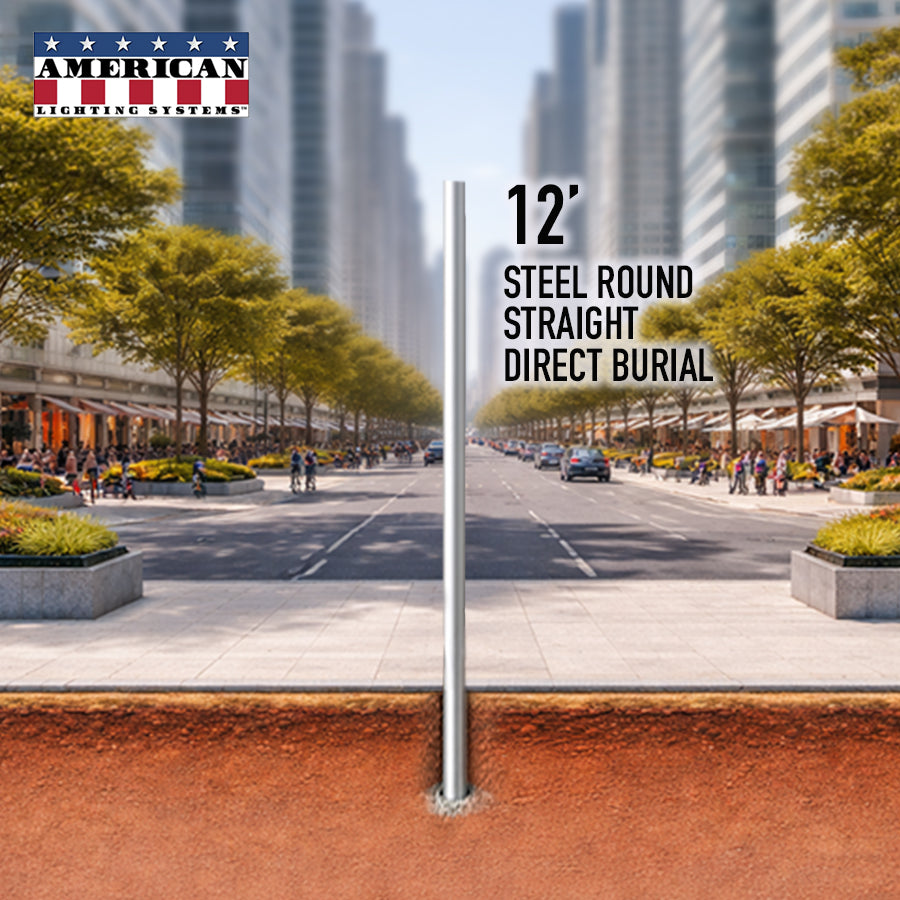
Steel direct burial light poles are single-piece steel poles designed to be installed by embedding the pole shaft into the ground to a specified depth. They're a common choice for commercial and industrial site lighting when you're building new foundations from scratch, working around site constraints, or replacing an existing pole that was also installed as direct burial.
Unlike anchor base poles (which bolt to a concrete foundation), direct burial poles do not use a base plate or bolt circle. The installation is driven by proper embedment depth, soil conditions, and project requirements. With the exact pole height and configuration selected at the product level.
Shop Steel Direct Burial Pole Types
Choose the pole shape and profile that best matches your site and existing poles:
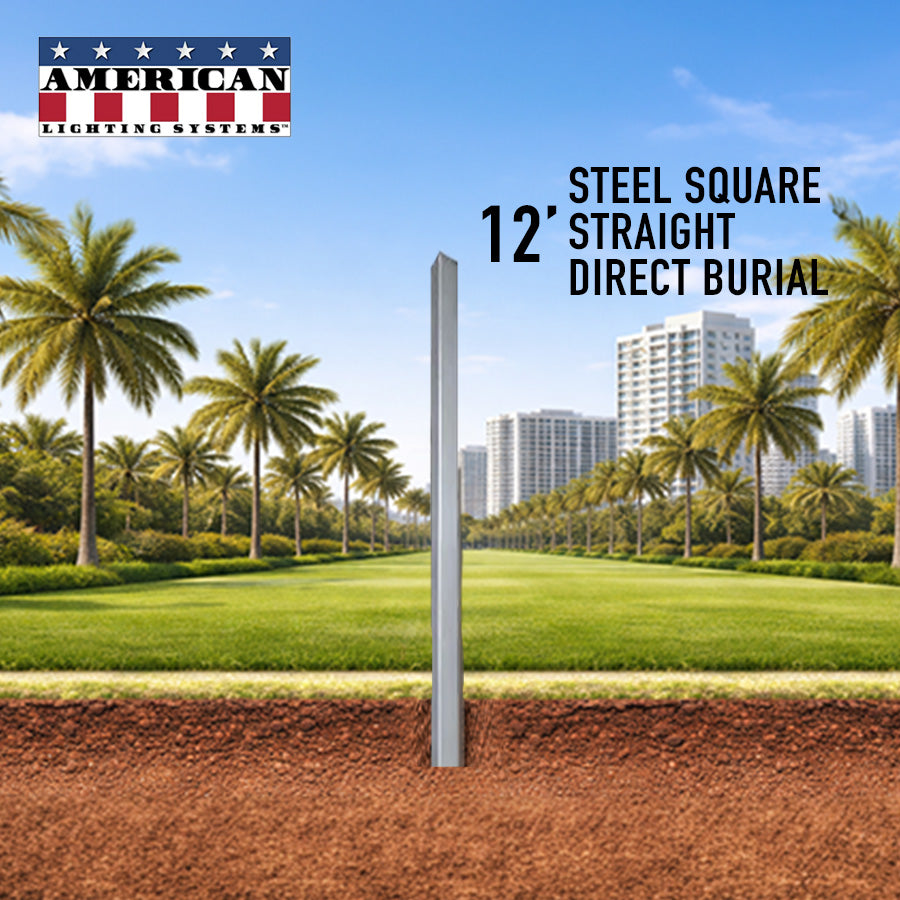
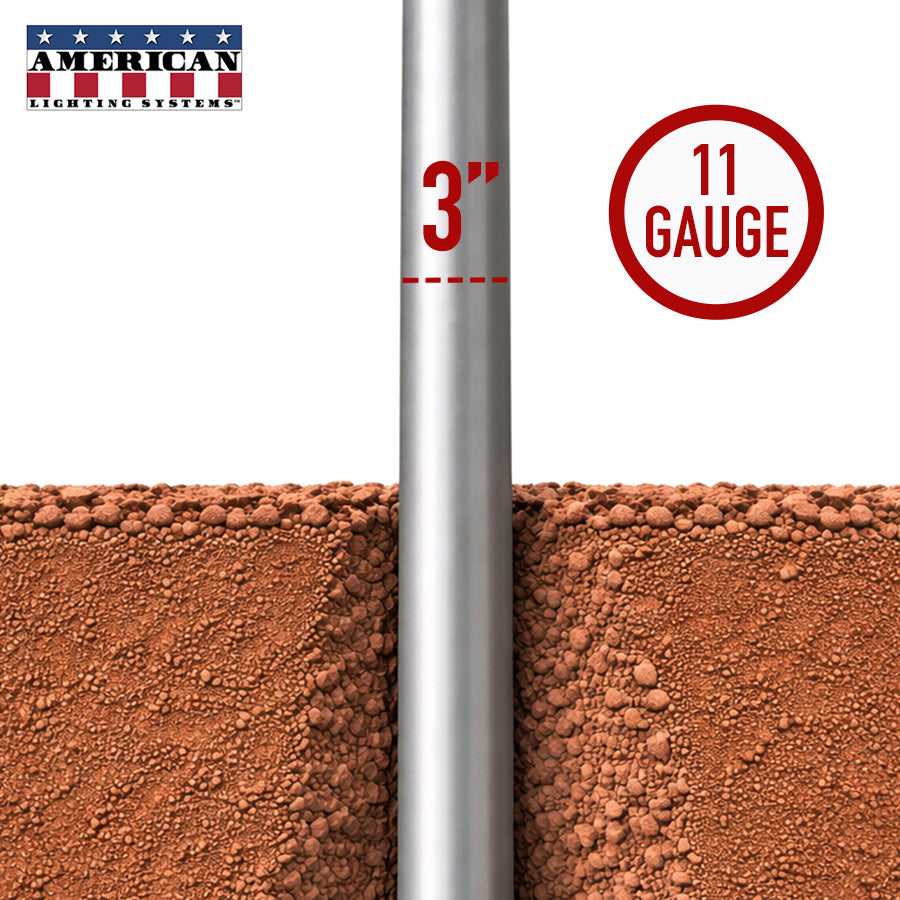
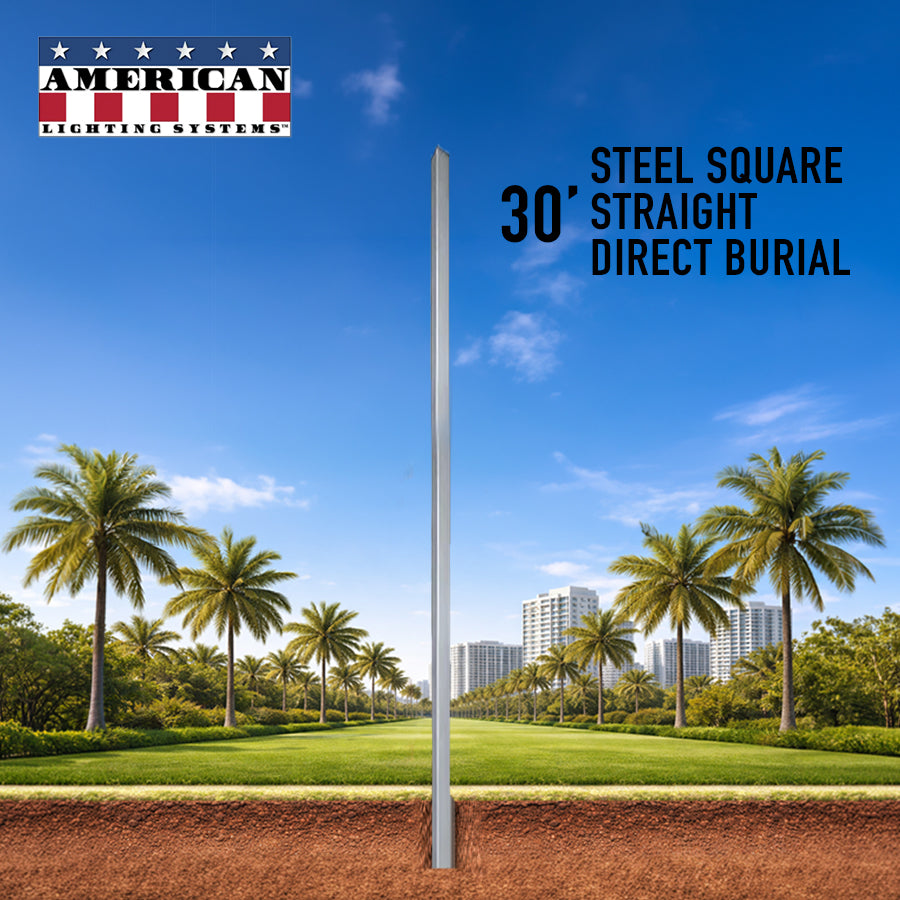
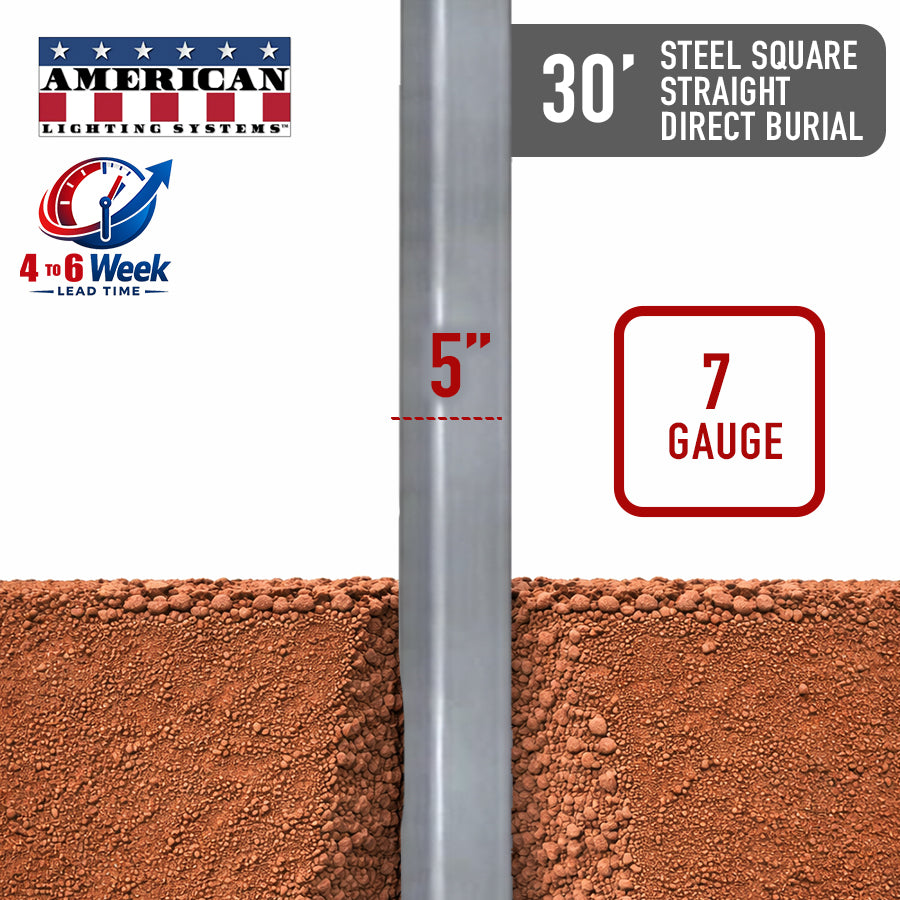
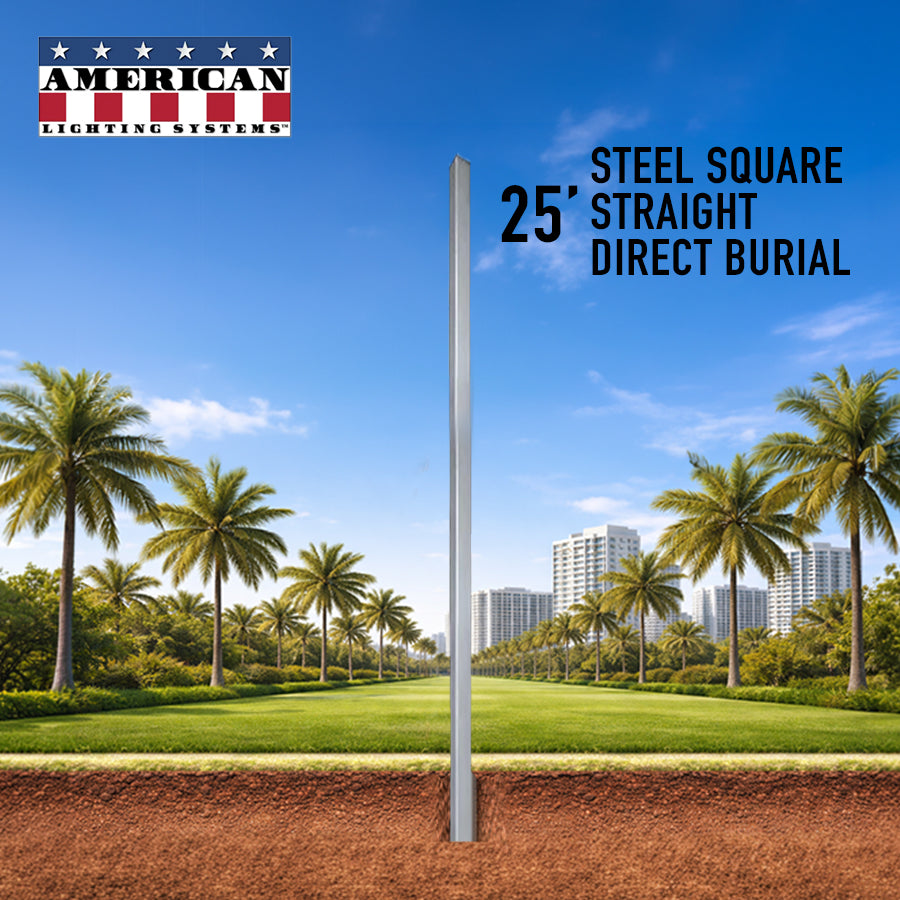
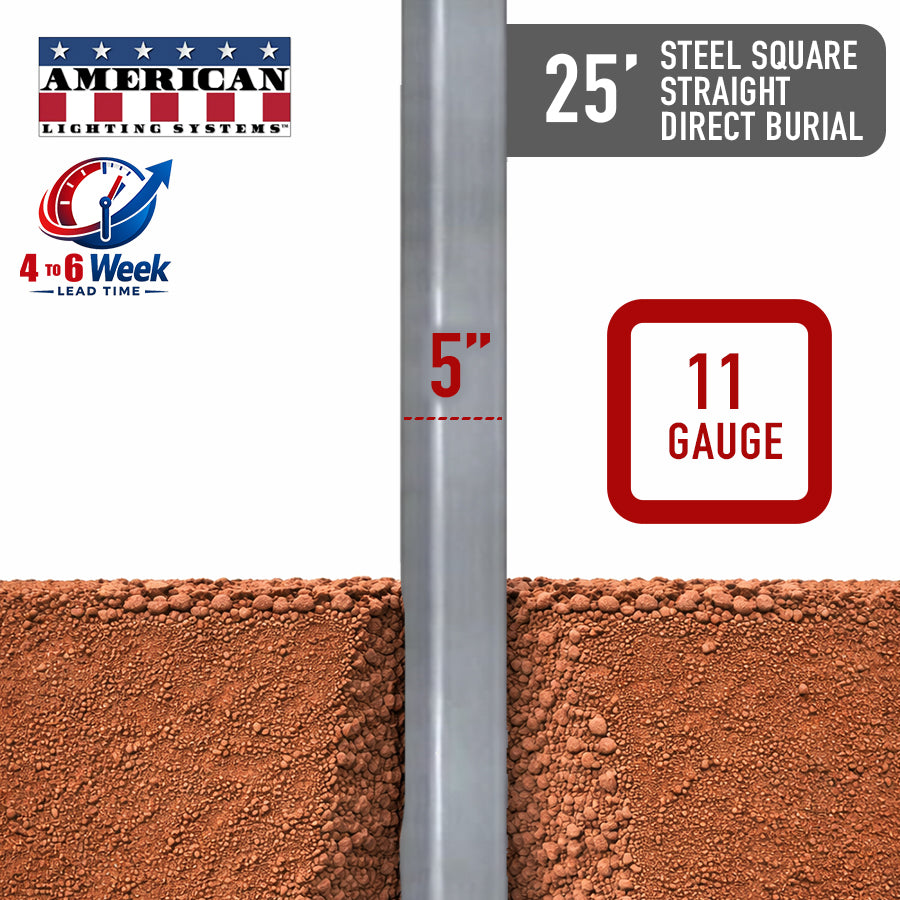
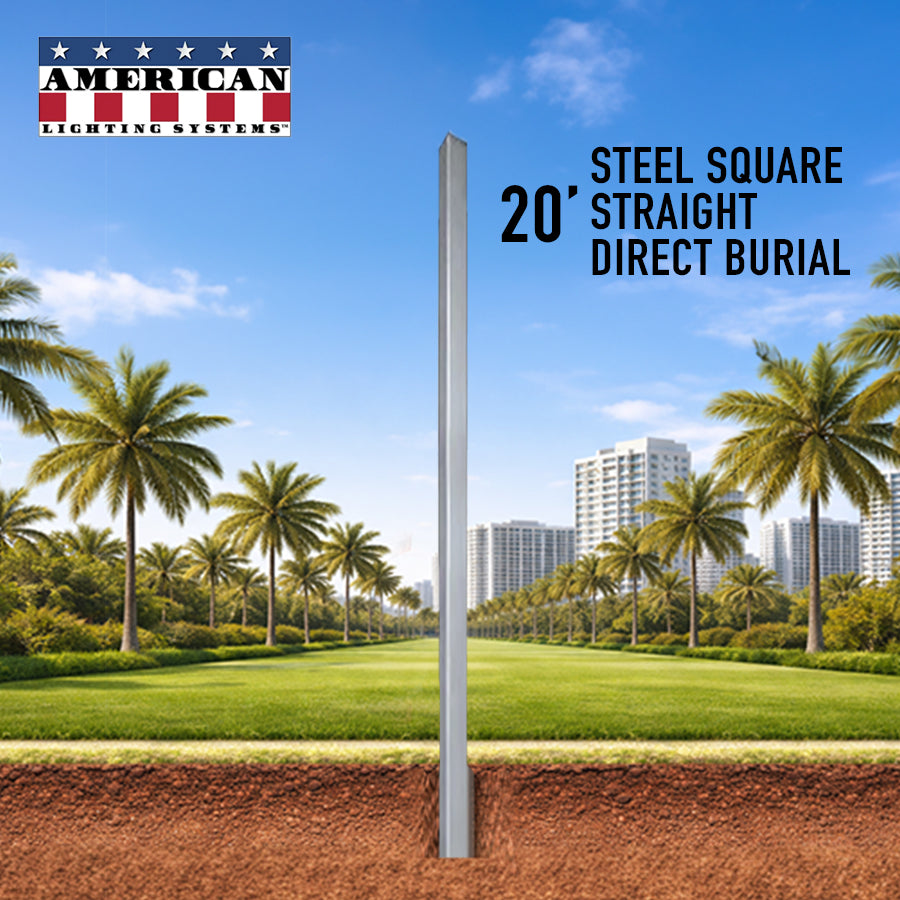
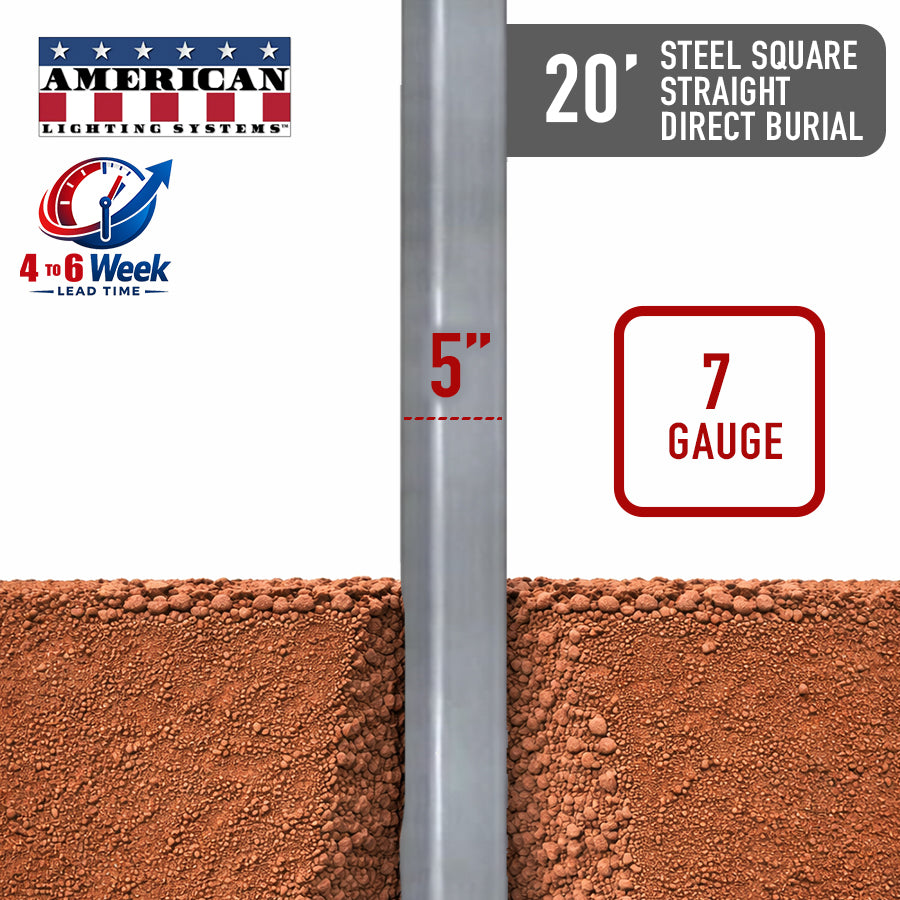
Steel Square Straight Direct Burial Poles
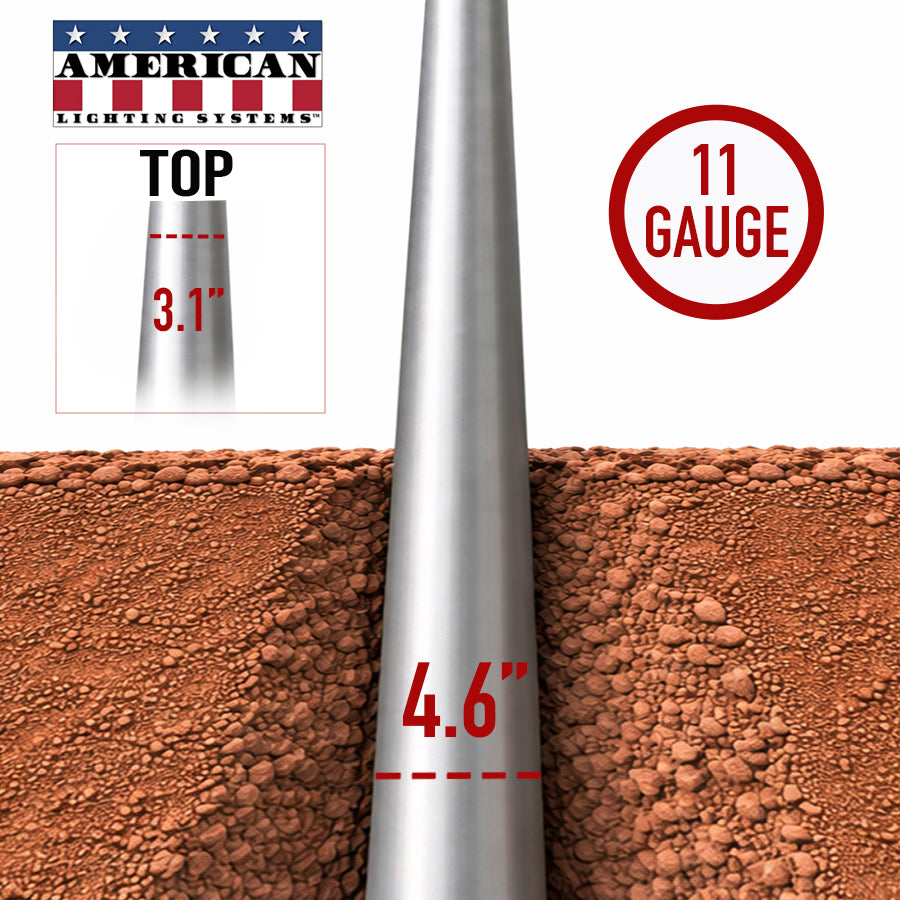
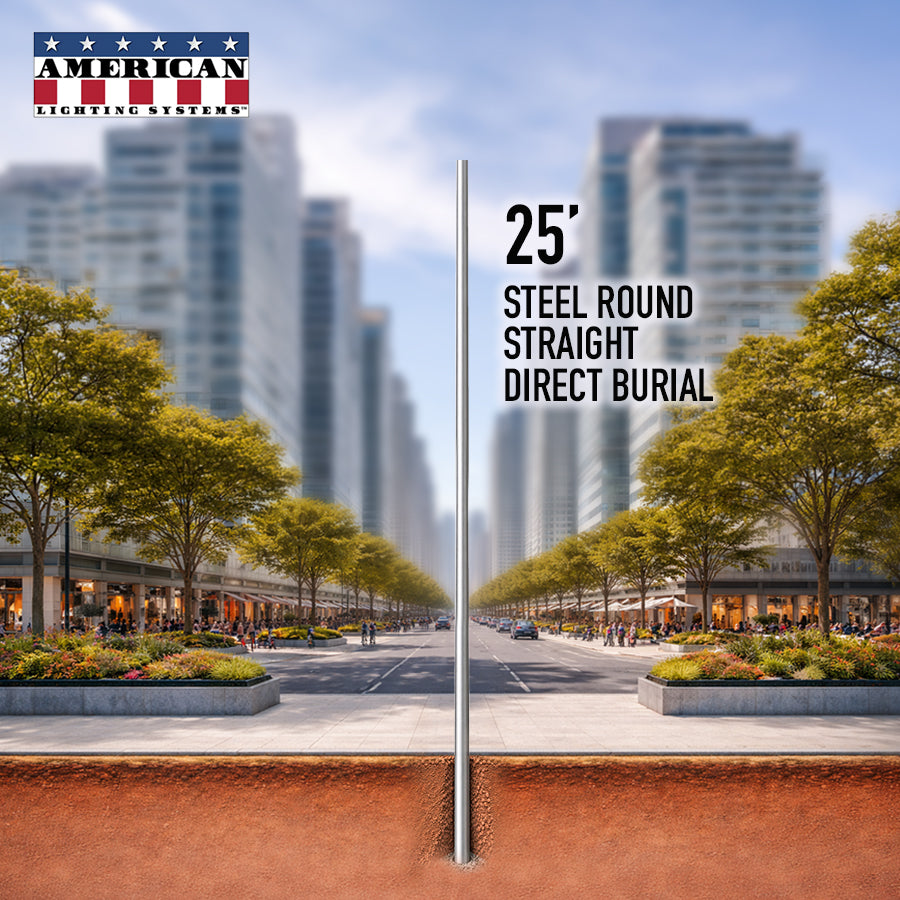
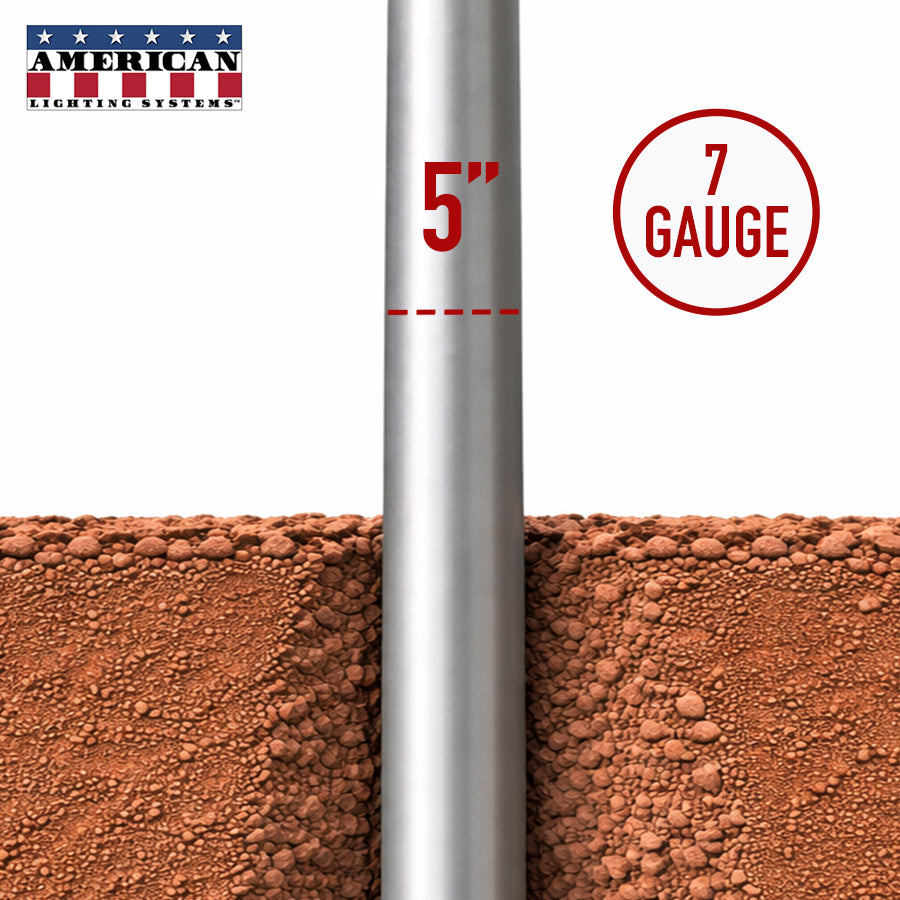
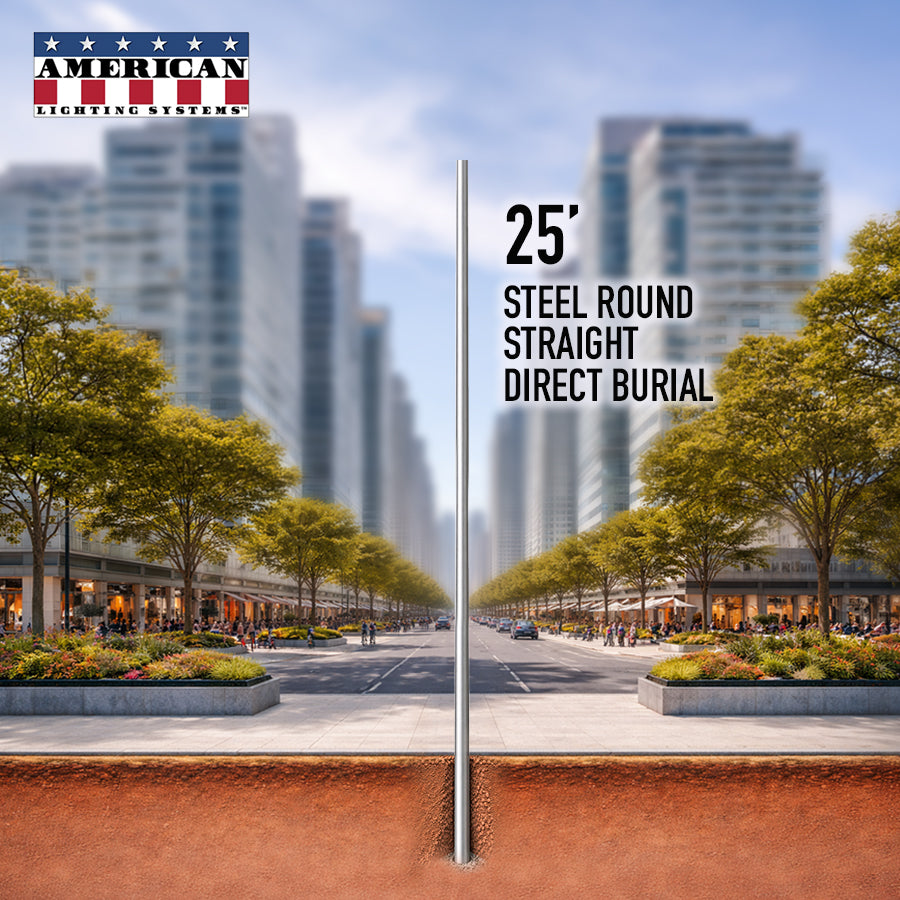
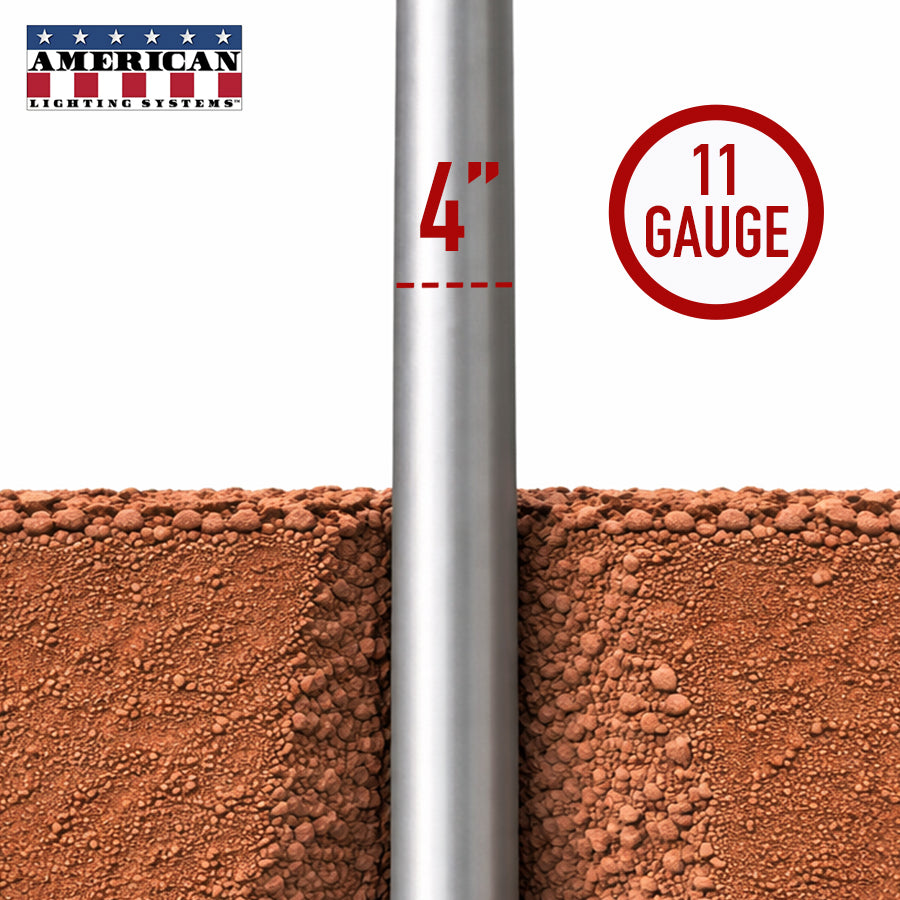
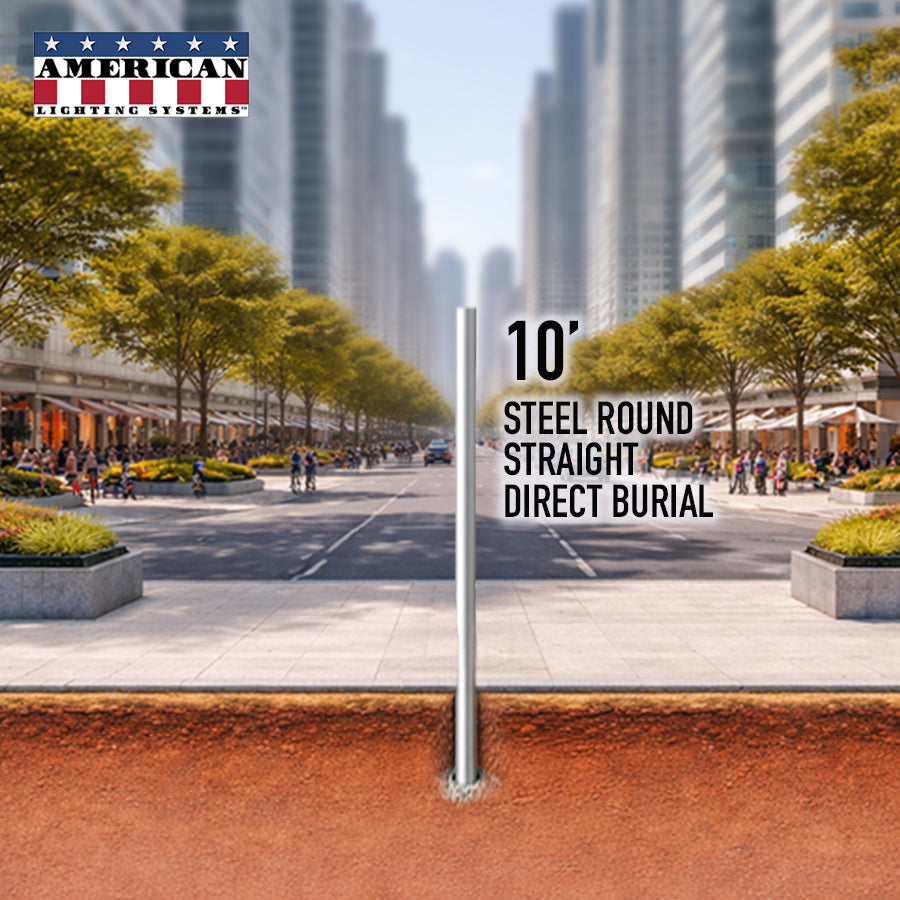
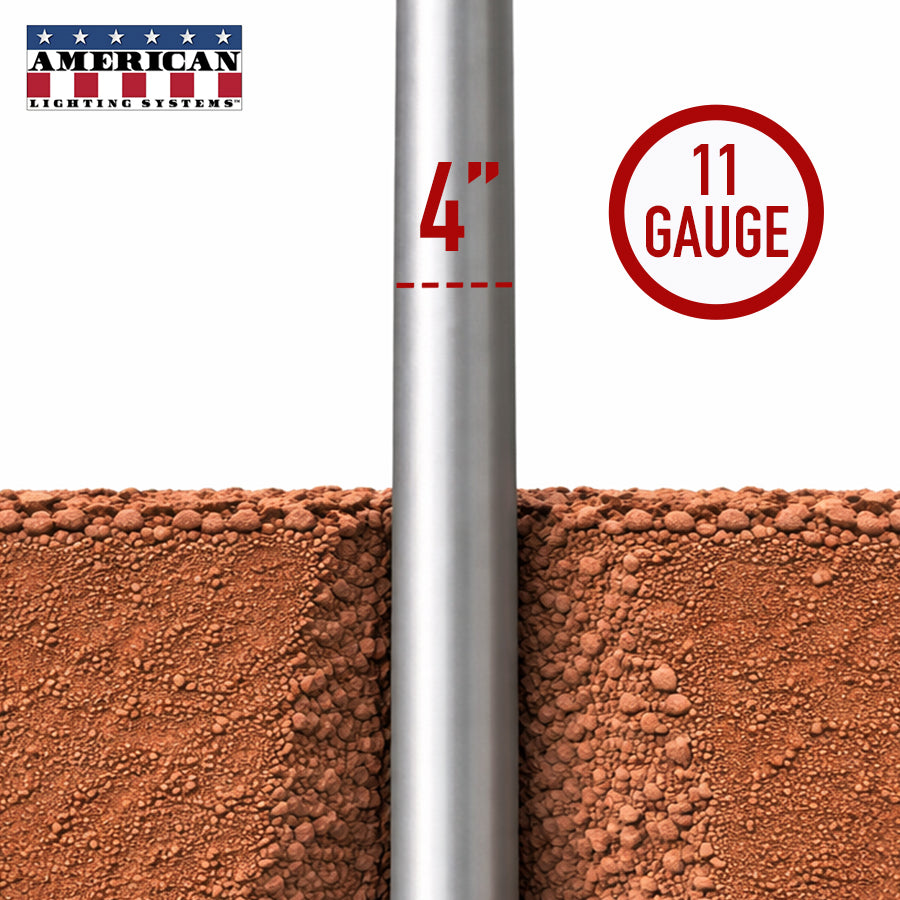
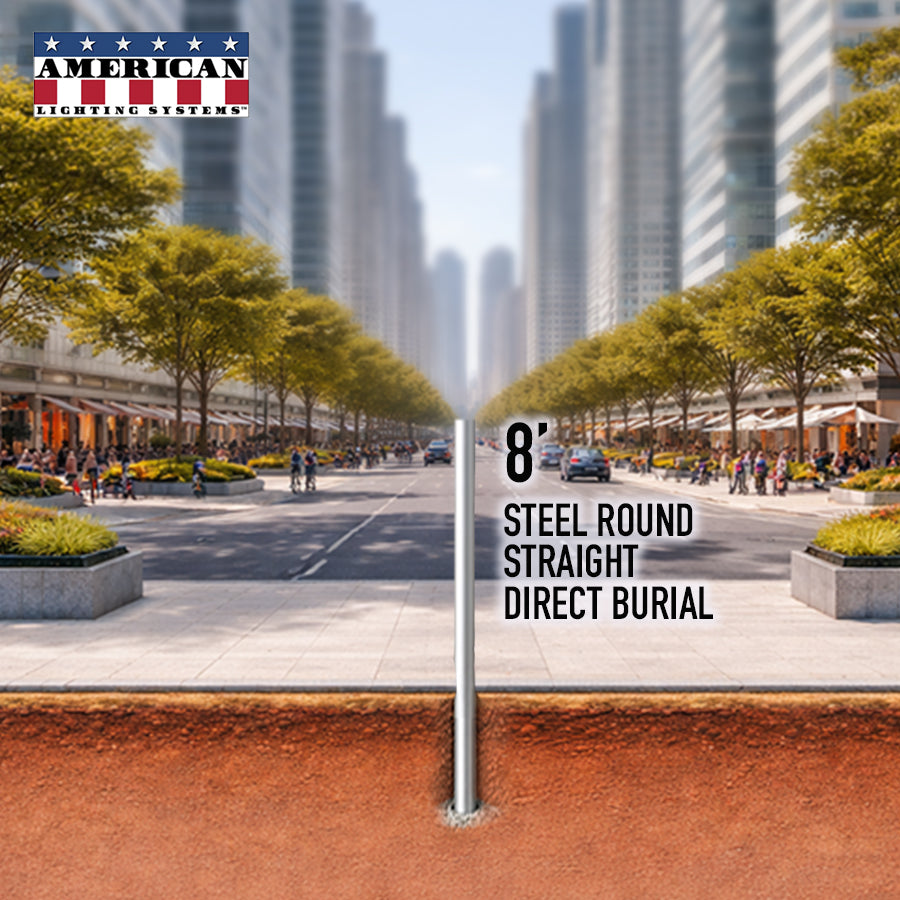
Steel Round Straight Direct Burial Poles
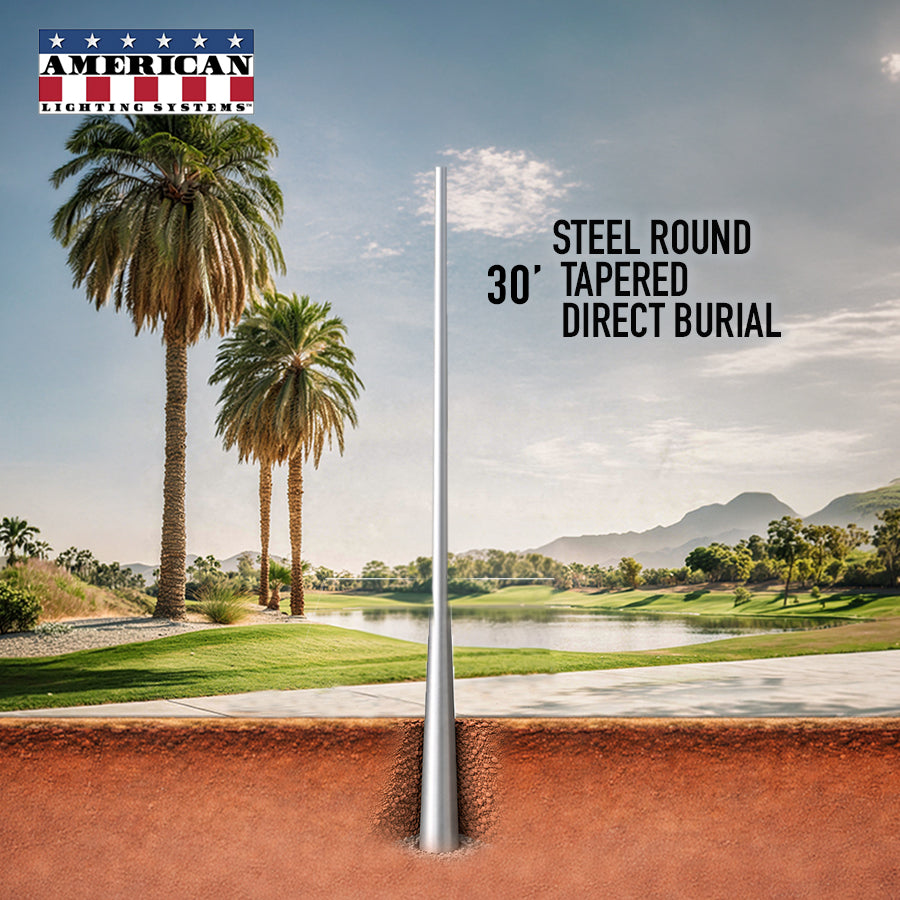
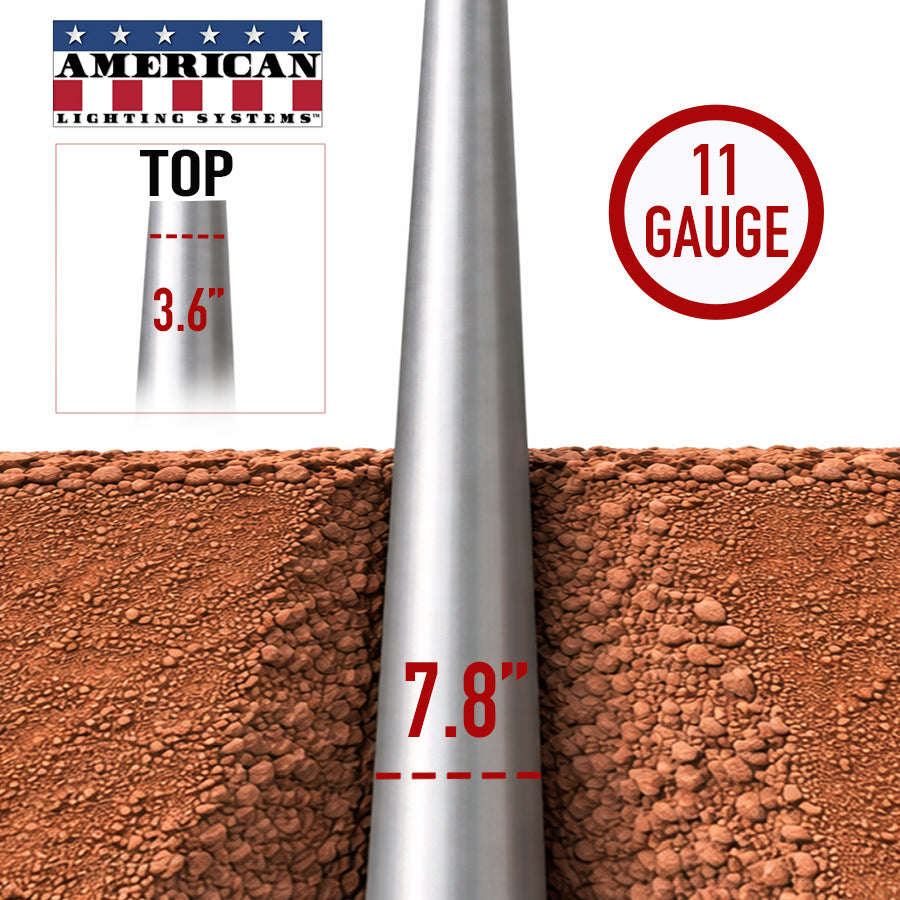
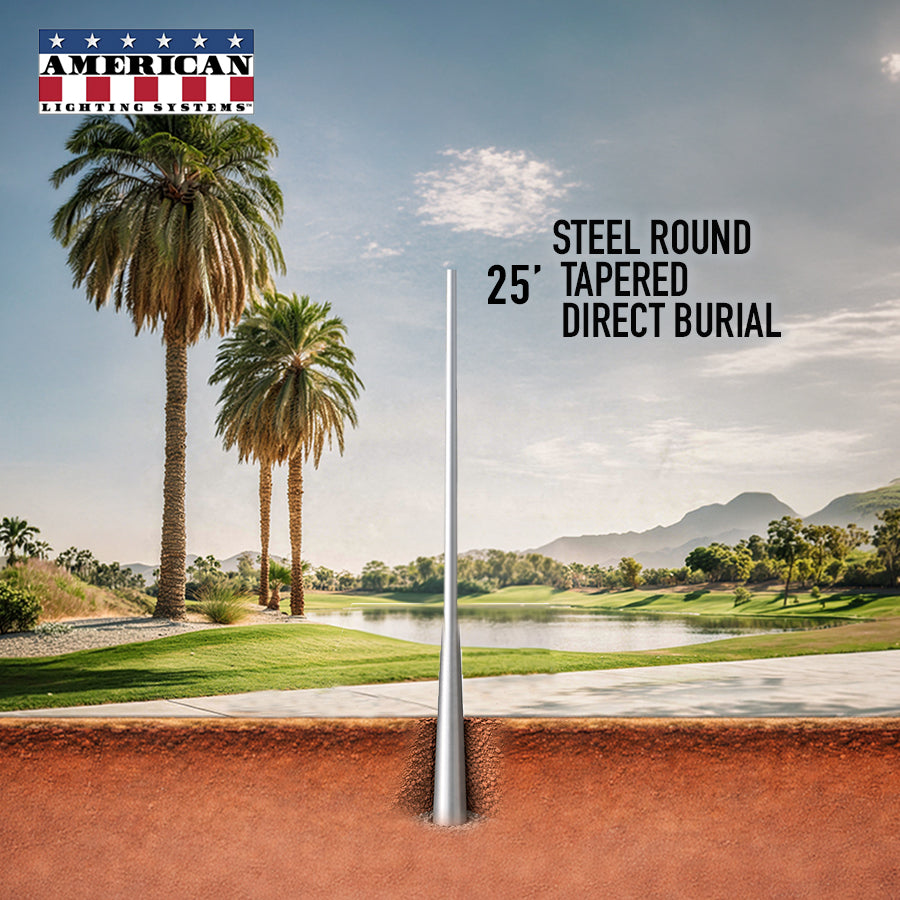
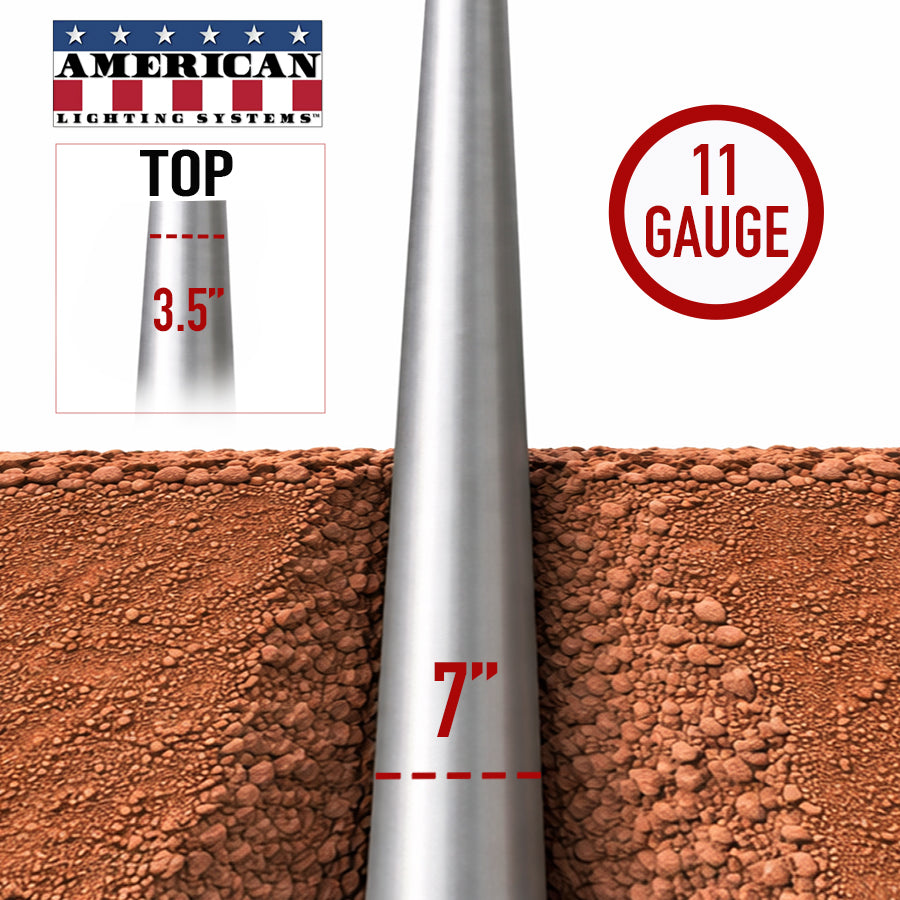
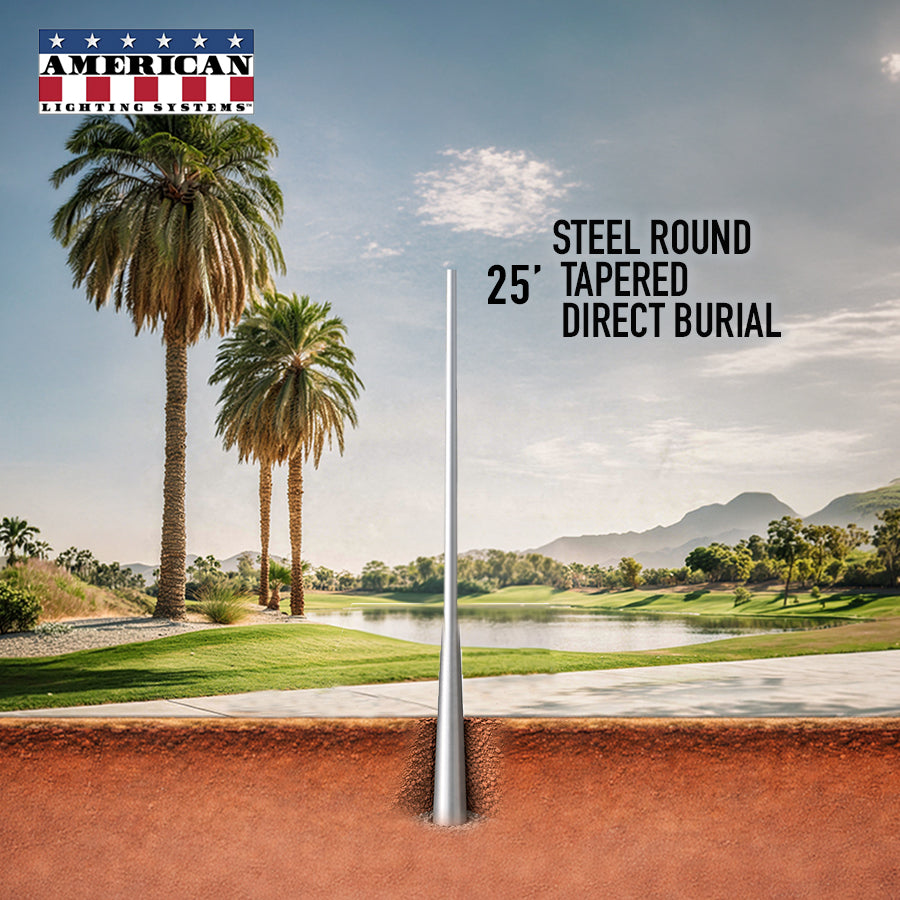
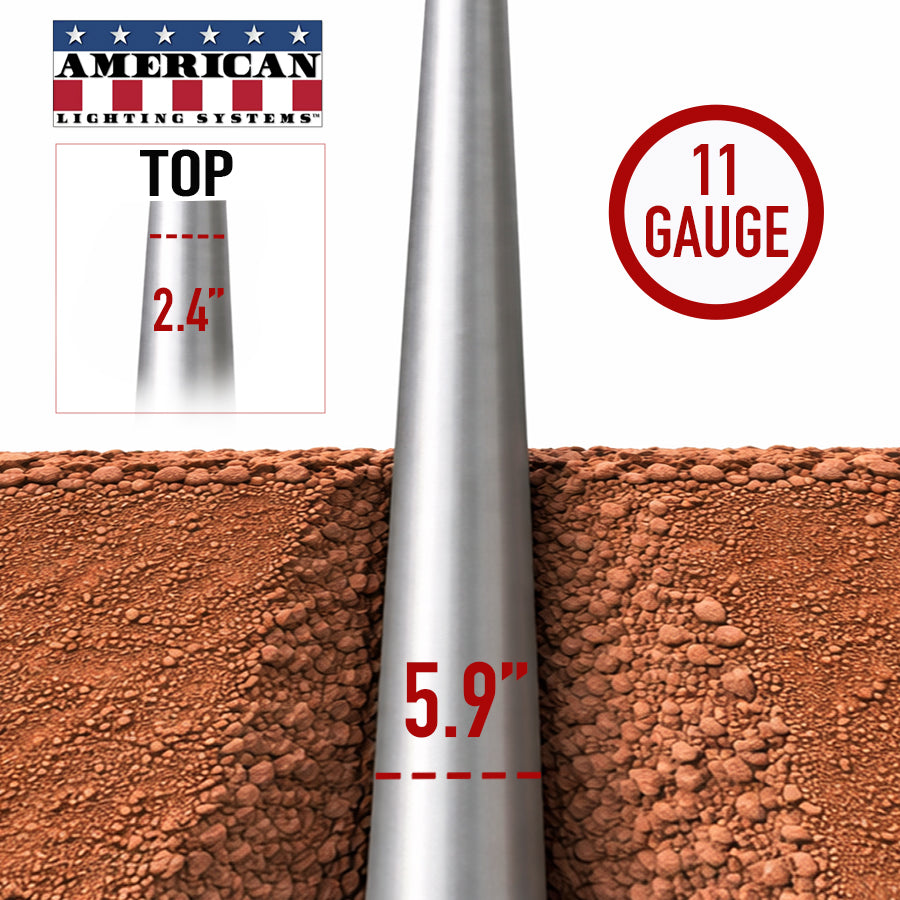
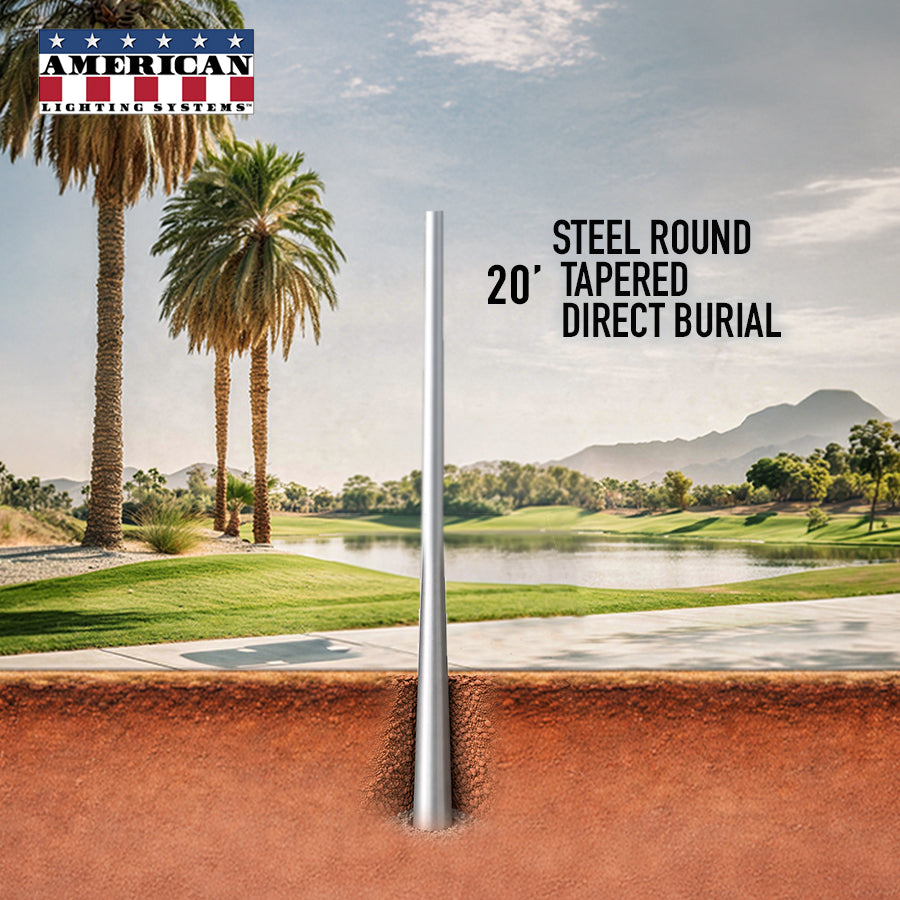
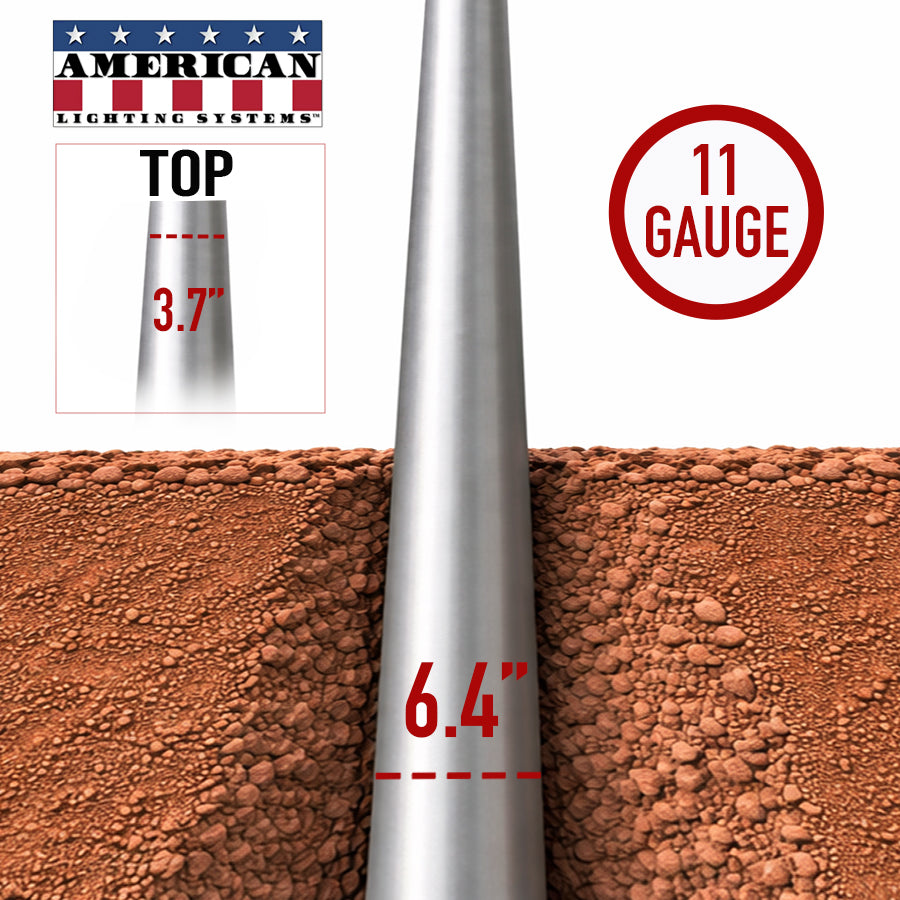
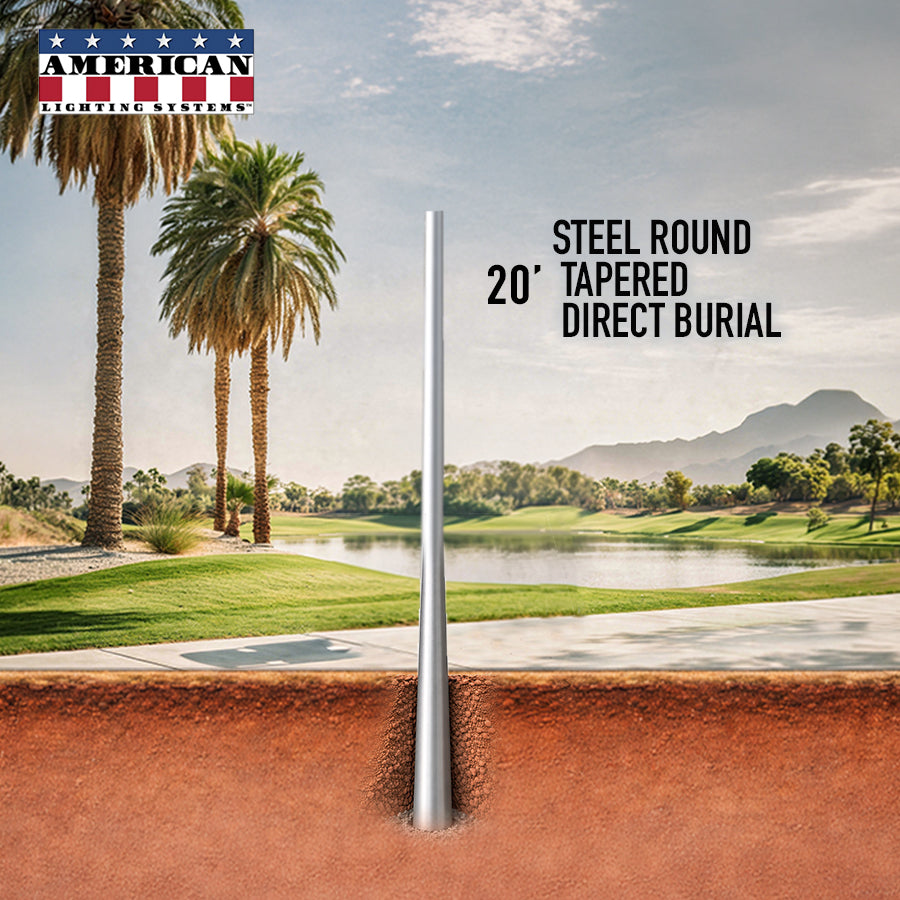
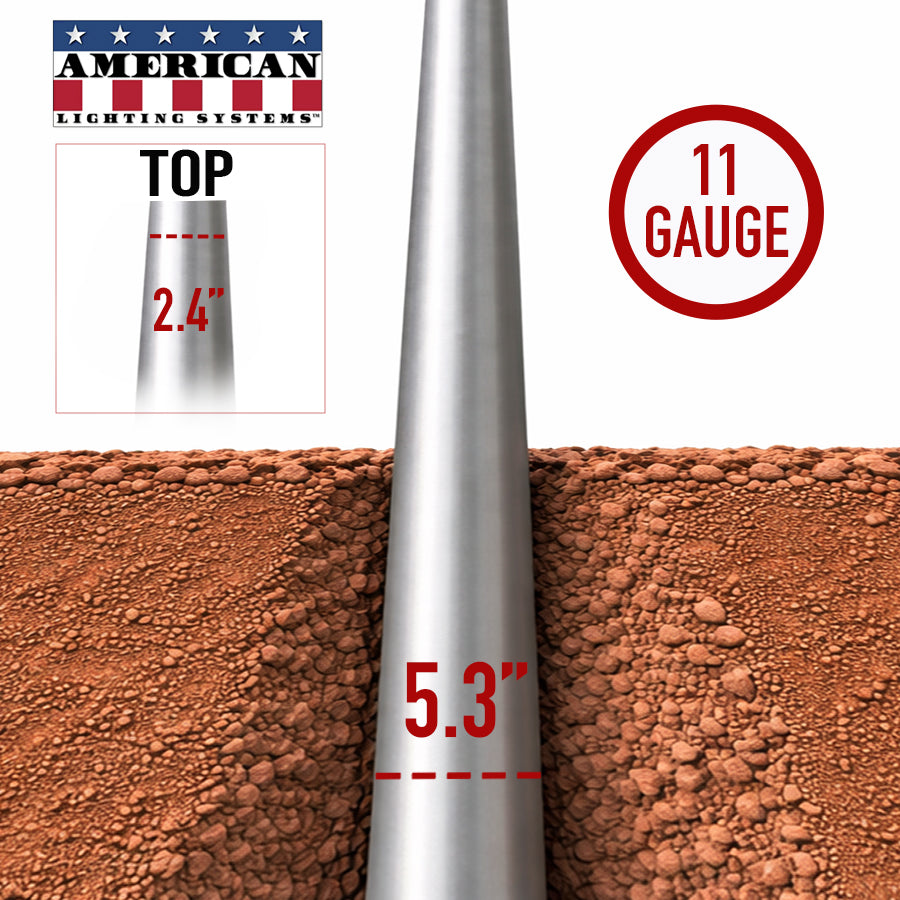
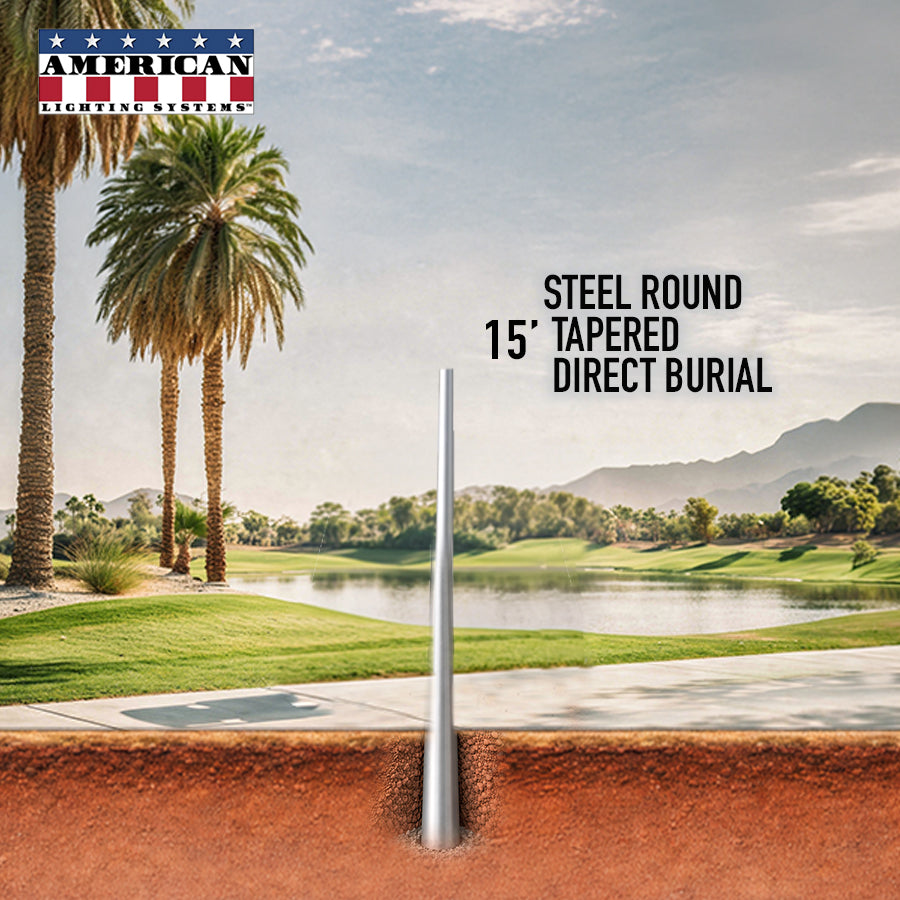
Steel Round Tapered Direct Burial Poles
Where Steel Direct Burial Poles Are Commonly Used
Parking lots for retail centers, restaurants, and shopping plazas
Warehouses, distribution centers, and industrial yards
Perimeter lighting and general site lighting
Campuses, walkways, and pedestrian areas
New construction projects where poles will be embedded below grade
Replacement projects where the existing poles are also direct burial
What to Consider Before Ordering a Steel Direct Burial Pole
Key project considerations include:
Confirm direct burial is the right installation type: If your existing pole is embedded below grade (not bolted to a concrete base), direct burial is typically the correct category.
Pole height and site layout: Height is usually driven by spacing, fixture output, and target light levels. For replacements, matching existing height helps maintain coverage.
Soil conditions and embedment requirements: Direct burial installations depend on proper embedment depth and soil conditions. Local code and engineering guidance may apply.
EPA / wind load requirements: Make sure the pole rating matches your wind zone and the fixture/bracket EPA (effective projected area).
Top mounting compatibility: Confirm how your fixture mounts (tenon, slip fitter, bracket, etc.) so the pole top configuration matches.
Environment and corrosion exposure: Coastal and high-humidity environments may require extra attention to finish/coating selection.
Steel Direct Burial Poles FAQs
What does direct burial mean for a light pole?
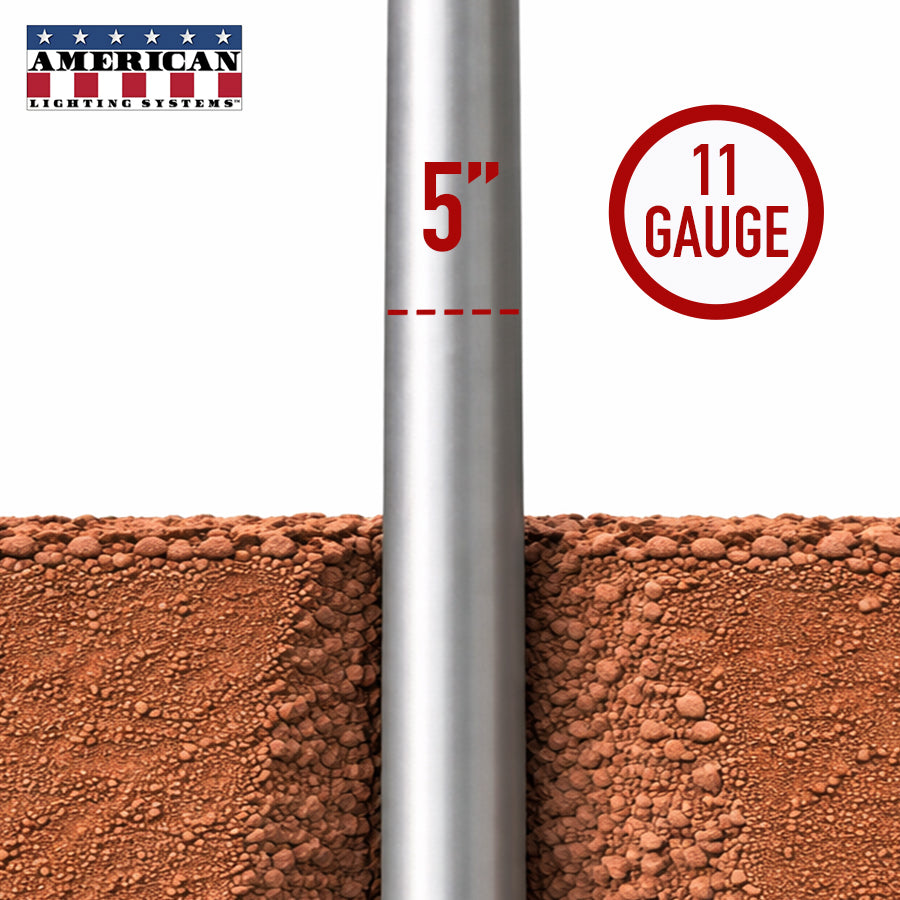
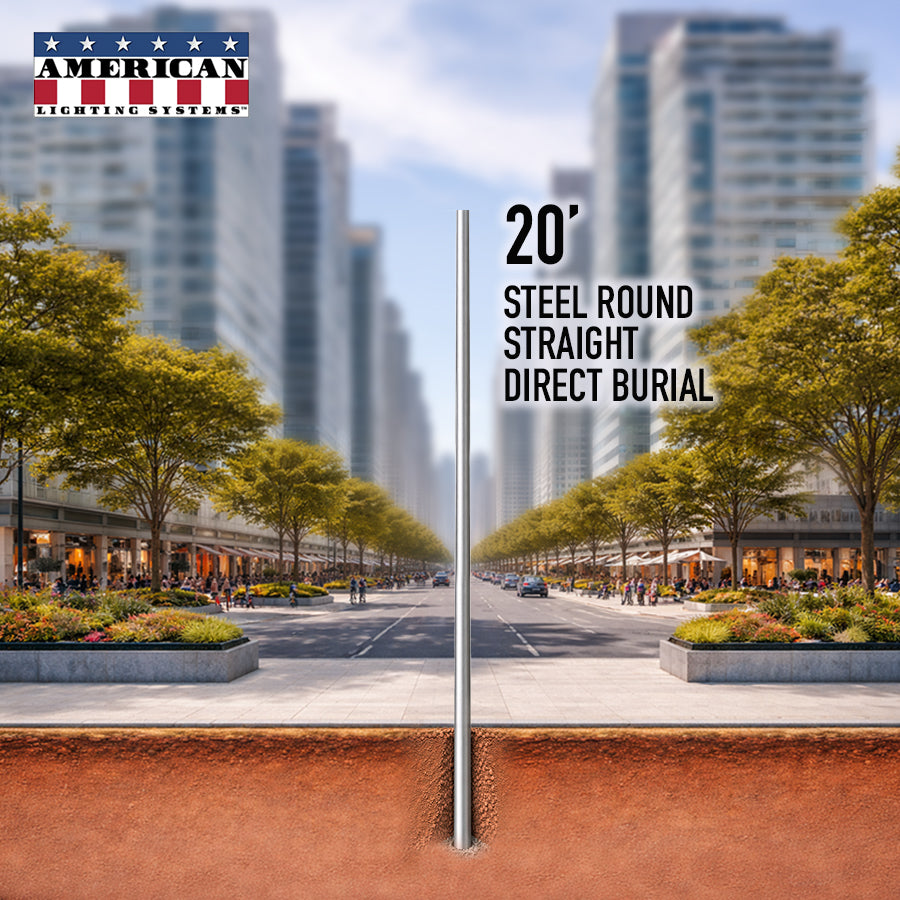
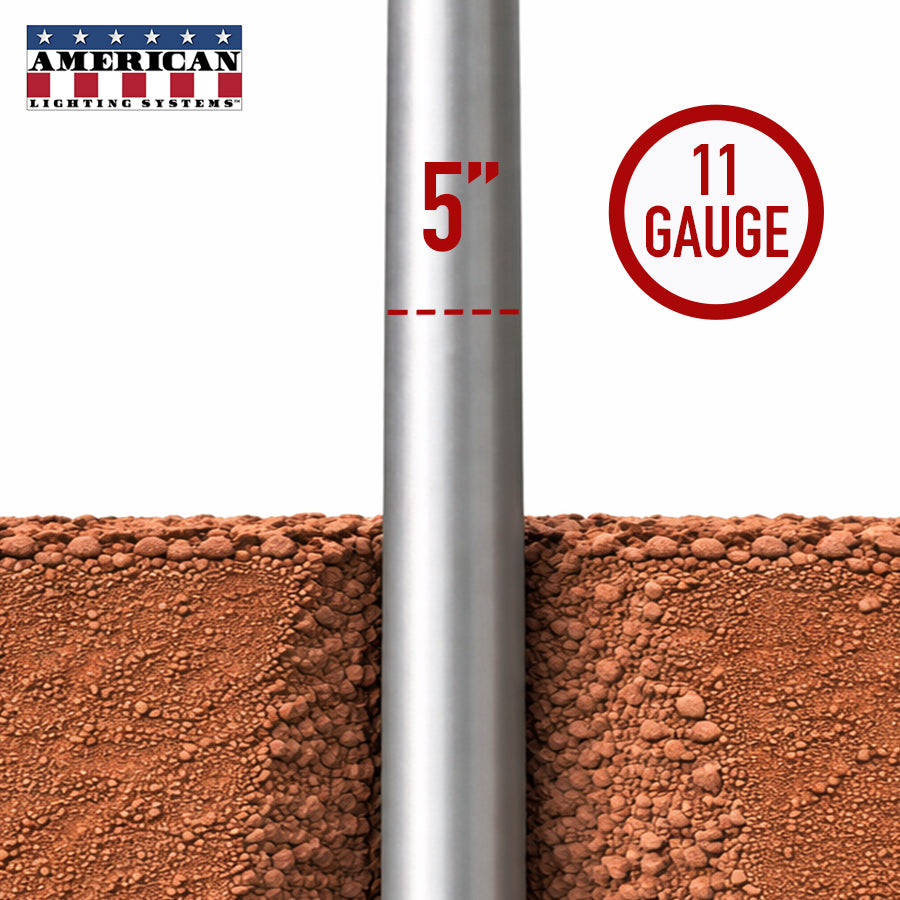
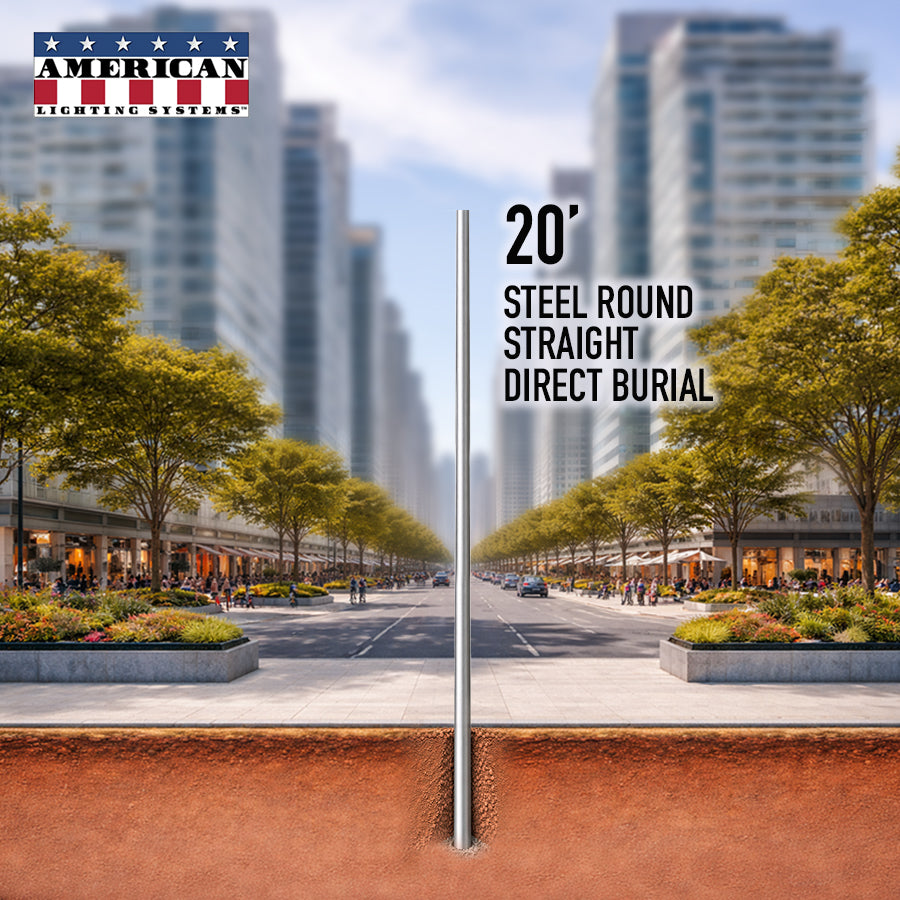
Direct burial means the pole is installed by embedding the pole shaft into the ground to a specified depth. There is no base plate and no anchor bolts.
Are these steel poles one-piece or two-piece?
These are single-piece steel poles.
How do I know if I need direct burial or anchor base?
If your existing pole is set into the ground (embedded below grade), you typically need direct burial. If your pole is bolted to a concrete foundation with anchor bolts, that's an anchor base application.
Do direct burial poles use a bolt circle?
No. Bolt circle/bolt pattern applies to anchor base poles that bolt to a concrete foundation. Direct burial poles are embedded in the ground.
How deep does a direct burial pole need to be set?
Embedment depth varies by pole height, wind requirements, and soil conditions. Follow local code/engineering requirements and the poles installation guidance.
What is EPA and why does it matter?
EPA (effective projected area) is the "wind sail" area of the fixture and any brackets. Pole selection should account for fixture EPA and local wind requirements to ensure the installation is properly rated.
Can I mount my existing fixture on a steel direct burial pole?
Often yes, as long as the mounting type and pole top configuration match (tenon size, slip fitter, bracket, etc.). Confirm the mounting method before ordering.
Are round or square direct burial poles better?
Neither is universally better. Most projects are driven by what is already installed, site standards, and appearance preferences. Choose the shape/profile that matches your application.
Should I choose straight or tapered poles?
Straight poles maintain the same cross-section up the shaft, while tapered poles narrow toward the top. Most of the time, the choice comes down to matching existing poles or meeting a sites appearance standard.
Can steel direct burial poles be used for replacements?
Yes. As long as the existing installation is also direct burial and the replacement pole matches the site requirements (height, mounting, and rating).